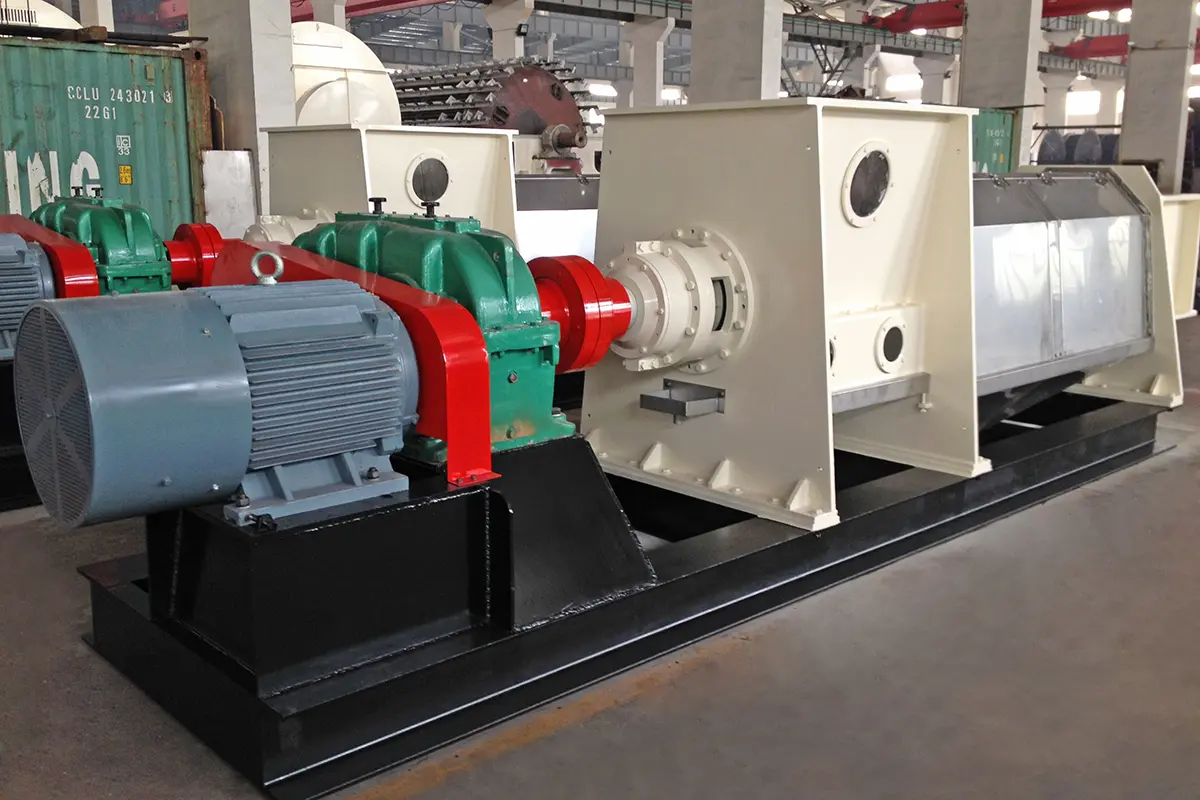
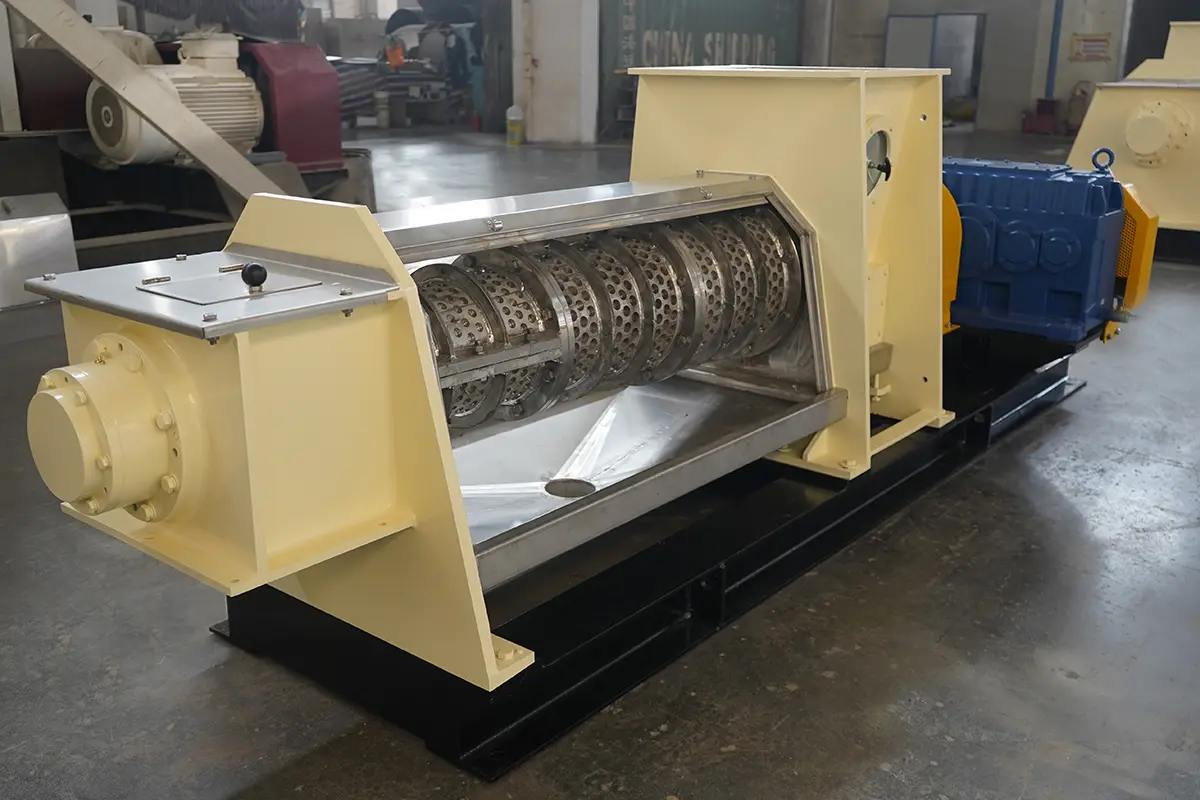
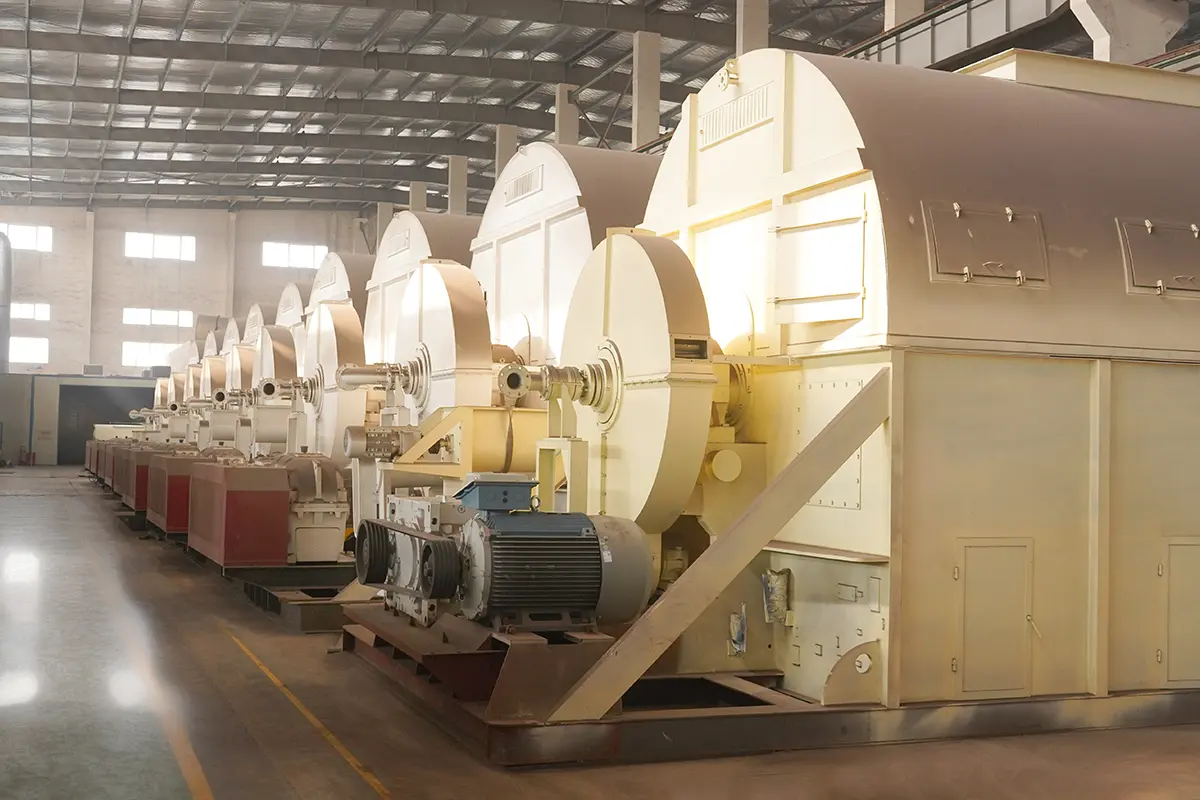
Explore our primary machinery and engineering designs tailored for robust industrial separation and dewatering performance.
High-performance, continuous operation dewatering systems optimized for starch fibers, organic pulp, and industrial sludges.
Learn More
Engineered for high compression and maximum extraction efficiency in large-scale solid-liquid separation plants.
Learn More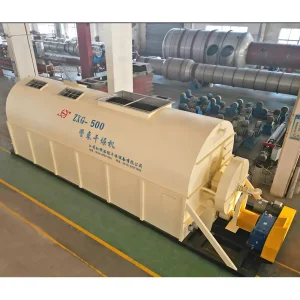
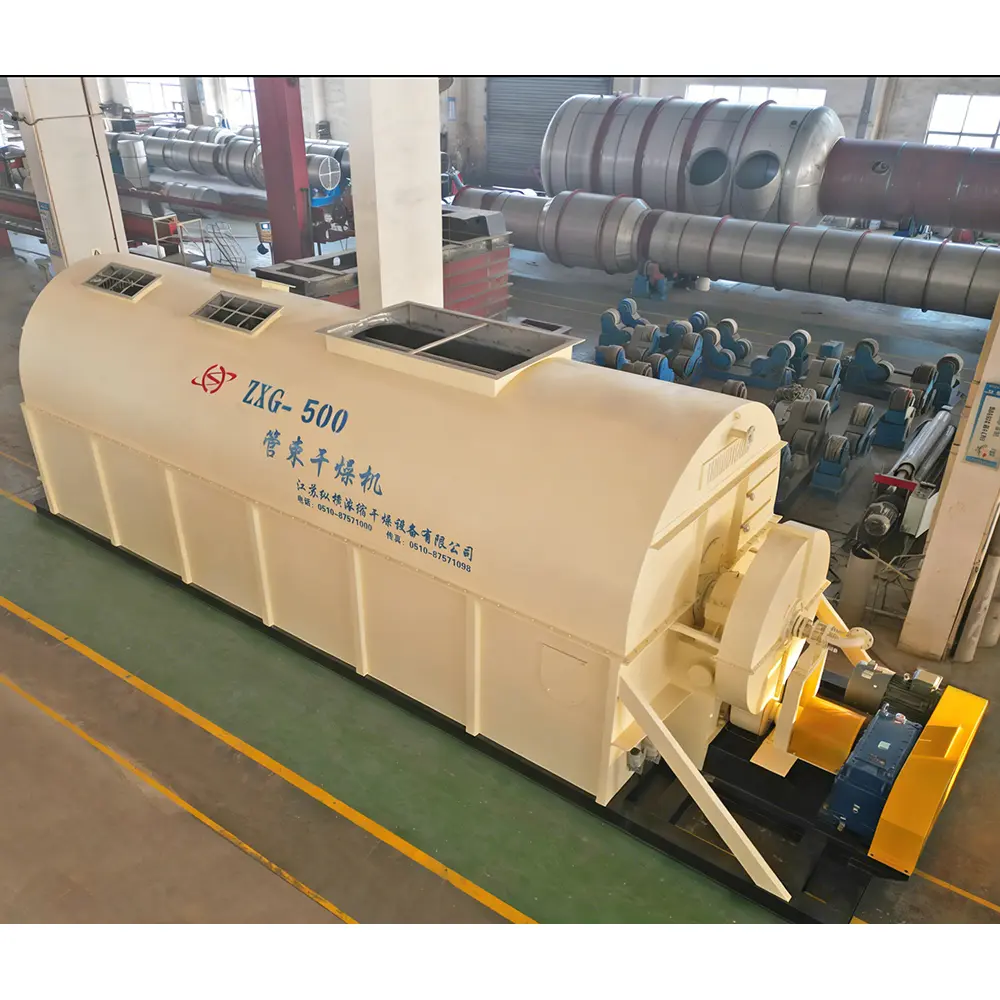
Indirect steam heating solution designed to process bulk powders and granular products with optimal thermal efficiency.
Learn More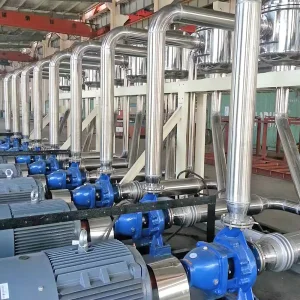
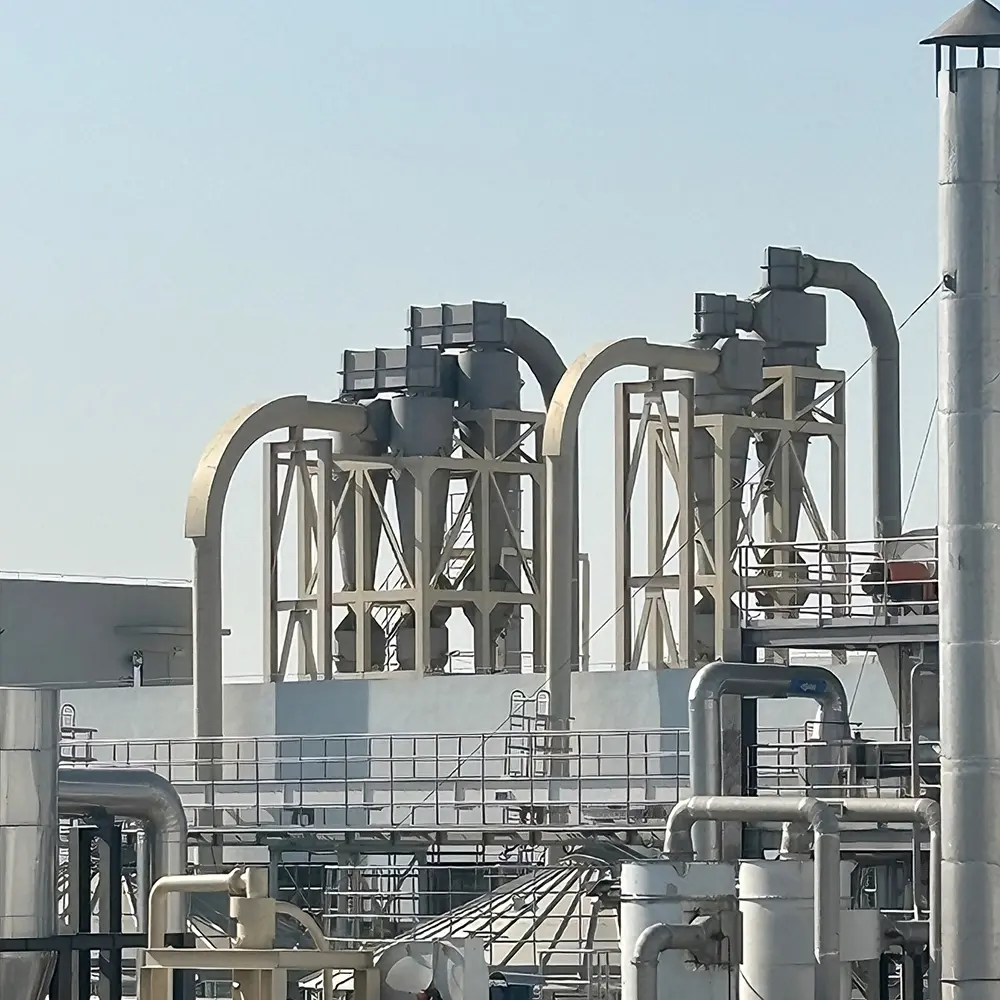
Multi-stage hydrocyclone systems configuration for high-purity starch washing, concentration, and refining operations.
Learn More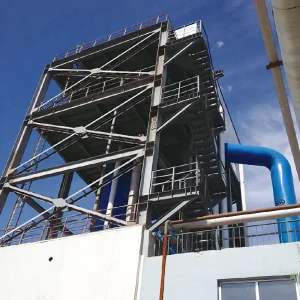
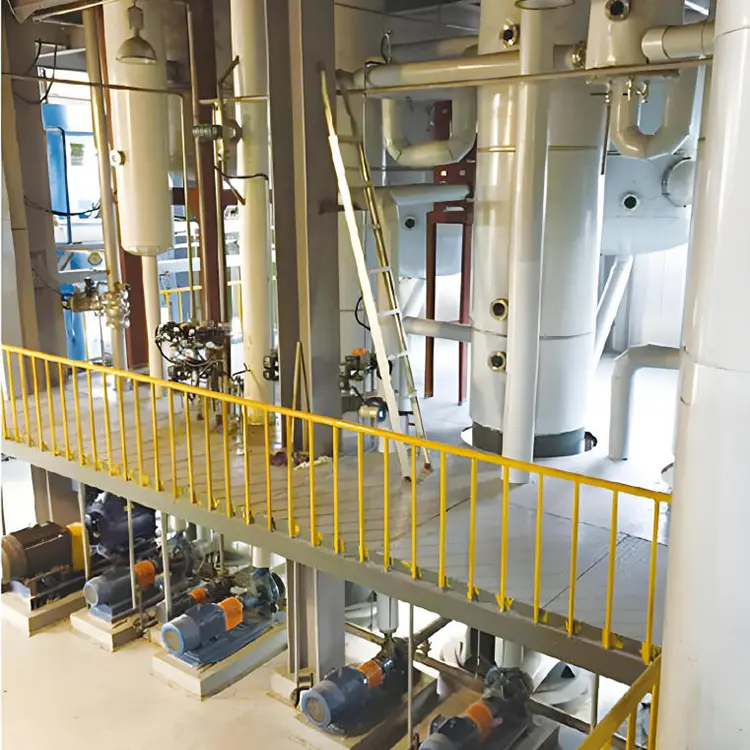
Mechanical Vapor Recompression plants engineered to minimize operational overhead by recycling latent heat.
Learn More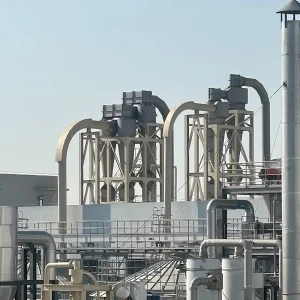
Utilizes flash drying mechanisms for instantaneous heat transfer, ensuring safe moisture control for sensitive materials.
Learn More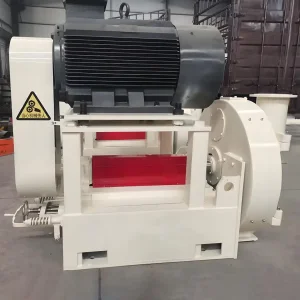
Precision engineered mill configuration designed to peel and separate maize germ with minimal kernel breakage.
Learn More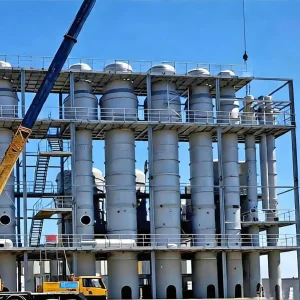
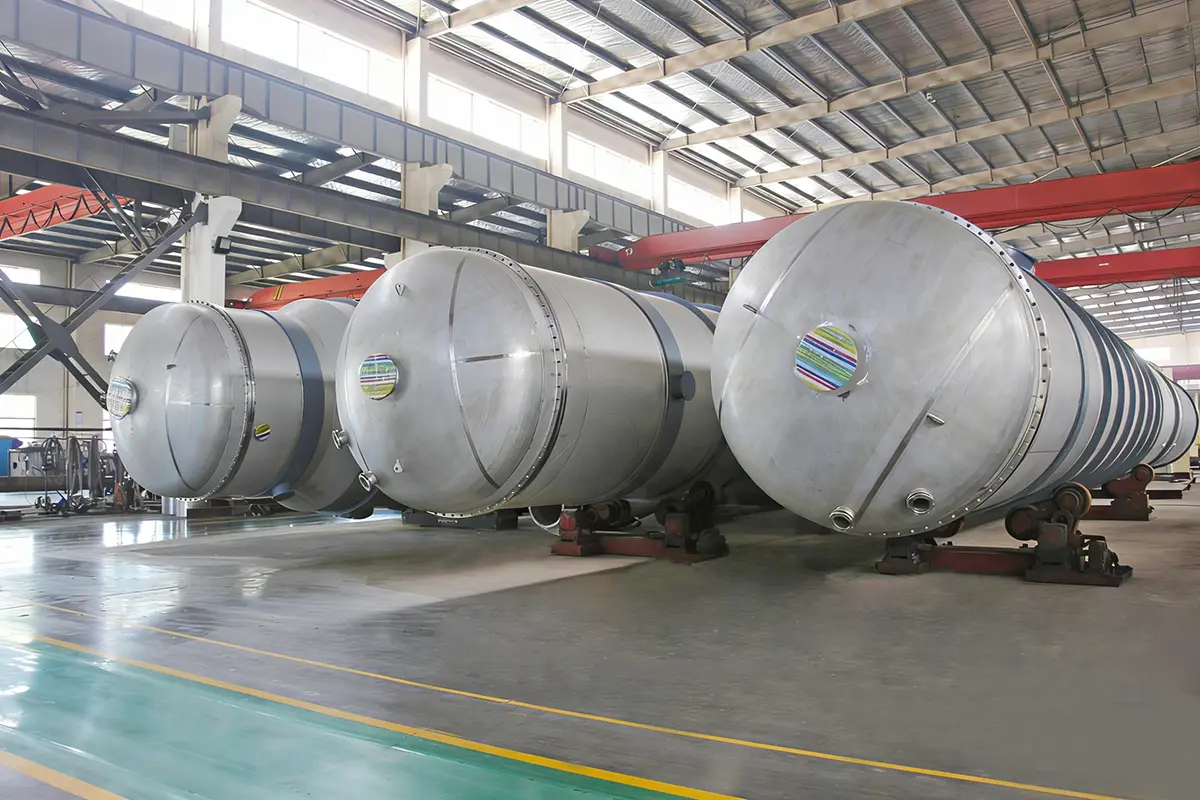
State-of-the-art multi-effect and thermal vapor recompression systems designed for demanding industrial concentrations.
Learn MoreModern industrial production mandates not only operational scale but deep thermal conservation. Evaporation systems represent the thermodynamic backbone of crucial sectors, including food fermentation, corn wet milling, bio-ethanol production (DDGS), pharmaceutical extraction, and zero-liquid-discharge (ZLD) environmental engineering.
As global energy pricing fluctuates, selecting the appropriate evaporation type (e.g., MVR, Falling Film, Forced Circulation, or Multi-Effect) dictates the long-term operational viability of manufacturing facilities. Each technology represents a distinct approach to manipulating boiling point elevation, liquid film dynamics, and vapor compression cycles.
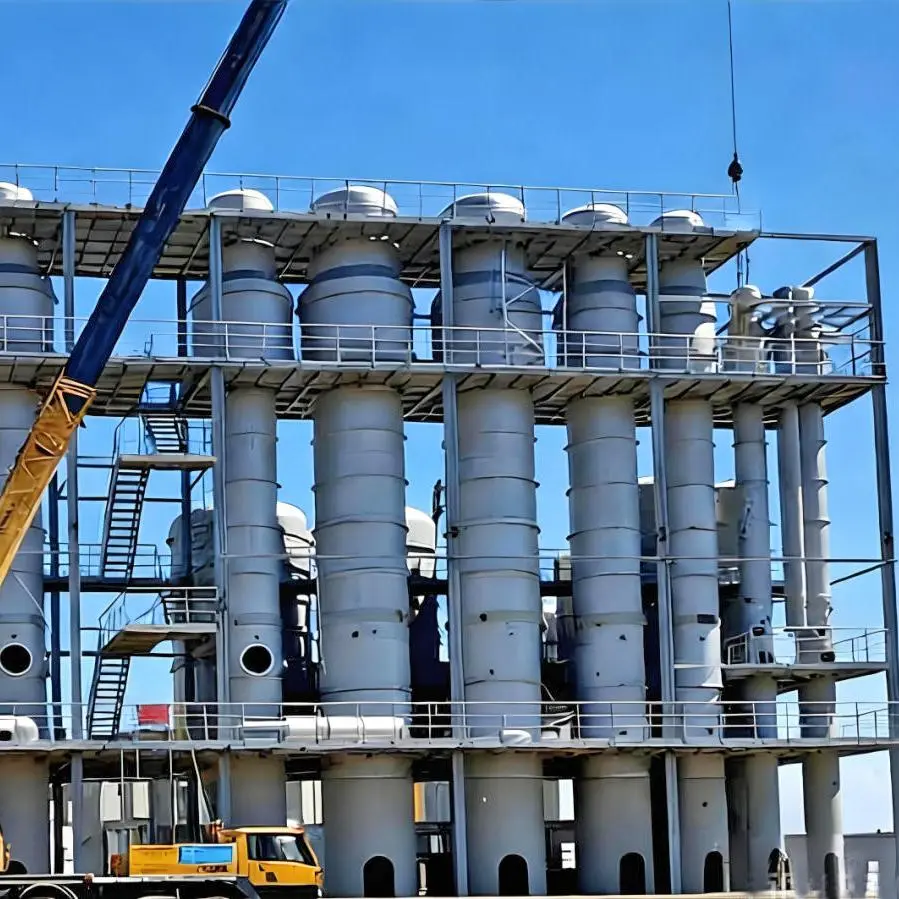
Choosing the right thermal concentration architecture depends on the physical chemistry of the feed solution.
Designed primarily for heat-sensitive, low-viscosity liquids. The feed liquor forms a thin, highly turbulent dynamic film that flows gravity-assisted down the inner surfaces of vertical tubes. This ensures exceptionally low residence times (seconds) and low operational delta-T, preventing thermal degradation of components like starches, proteins, and chemical intermediates.
Ideal for: Starch sweetening syrup, fruit juices, and chemical purification.
Engineered to handle materials prone to severe scaling, crystallization, or high dynamic viscosity. By utilizing heavy-duty recirculation pumps, the system forces liquid through heat exchanger tubes at high velocities (typically 2 to 3 m/s). Boiling inside the tubes is prevented by maintaining hydrostatic head, and vaporization occurs in a flash separator vessel.
Ideal for: Salt recovery, wastewater ZLD systems, and crystalline suspensions.
The pinnacle of high-tech efficiency. An MVR system recovers the latent heat of evaporation by capturing the clean boiled-off vapor, compressing it mechanically via a centrifugal fan or turbo blower, and raising its temperature and pressure. This compressed steam is then recycled back as the heating medium, requiring minimal external steam inputs.
Ideal for: High-volume industrial concentration with green power sourcing.
How modernization, dynamic heat-recovery loops, and digital control integration redefine mechanical evaporation efficiency.
The global industrial landscape is accelerating transition patterns away from fossil-fuel-reliant boilers. MVR evaporation aligns perfectly with this roadmap, converting thermal loops into electric-driven operations. By scaling up thermal efficiency using advanced turbochargers, manufacturers can achieve coefficient of performance (COP) metrics upwards of 15 to 20.
Evaporation scaling represents a significant operational pain point. The next-generation systems developed by Jiangsu Zongheng incorporate real-time monitoring of thermal resistance. When scaling thresholds are crossed, automated clean-in-place (CIP) cycles are initiated, optimizing chemical usage and minimizing plant downtime.
Optimal drying loops rarely rely on a single process. By combining falling film pre-concentration with intermediate screw press dewatering and final tube bundle or airflow flash drying, modern factories create unified systems that yield bone-dry outputs while keeping aggregate energy costs down.
Wastewater from desulfurization and biochemical operations contains high chloride and sulfate concentrations. Engineering designs have migrated toward high-grade duplex stainless steel (SUS329J4L, 2205), titanium (Gr. 2), and nickel alloys to eliminate chloride stress corrosion cracking, ensuring system lifespans exceeding 20 years.
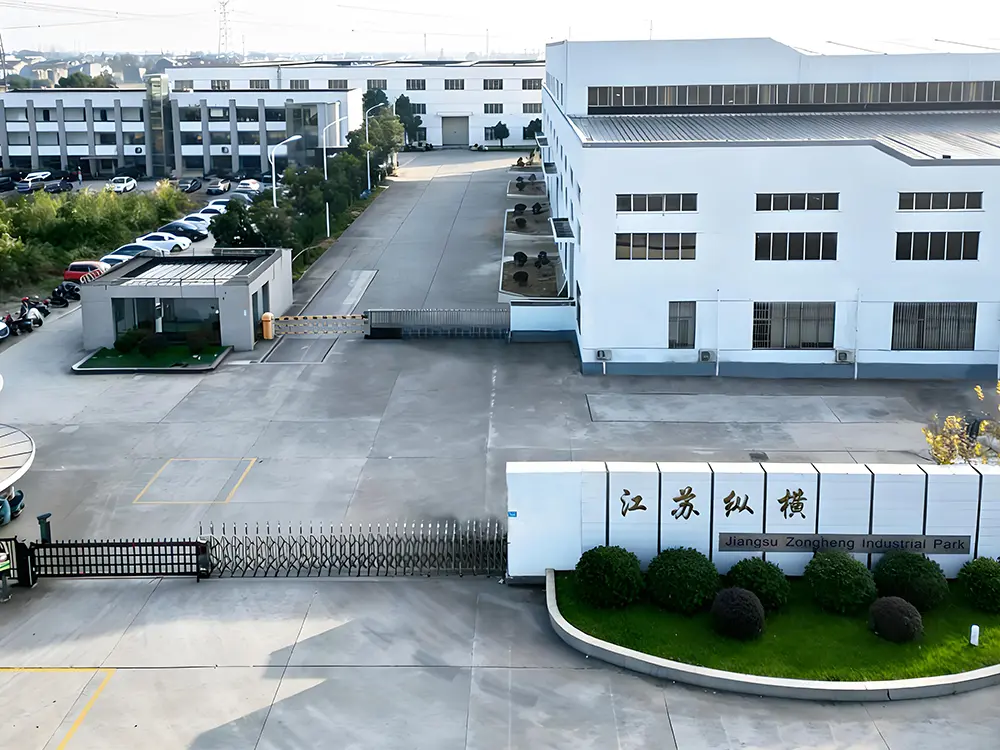
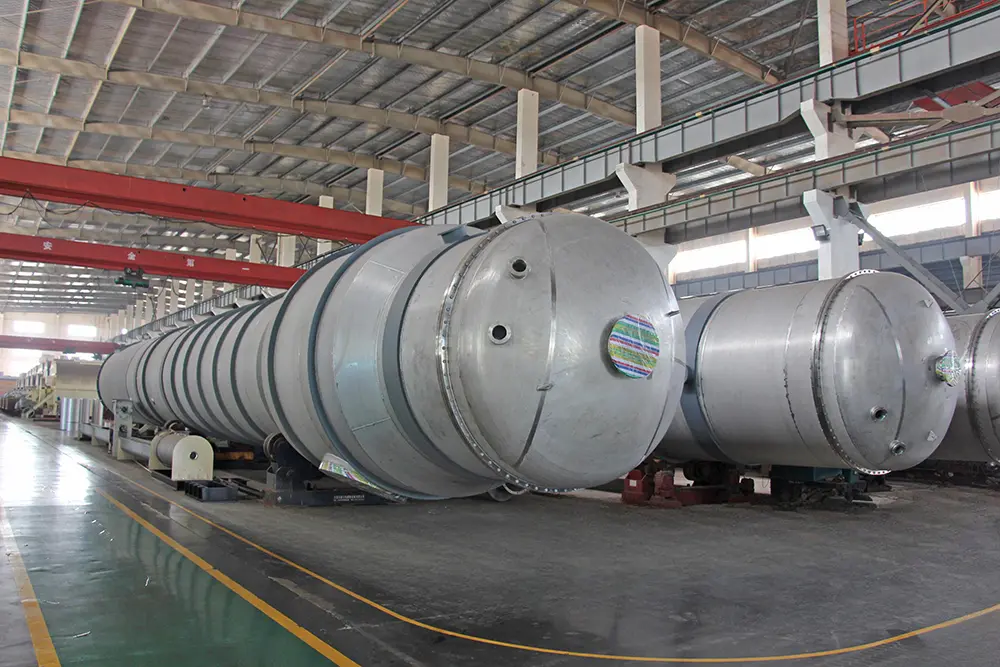
Originally established as the Yixing Yangxi Light Industry Machinery Factory, the company has spent three decades evolving into a high-tech powerhouse specializing in manufacturing concentration, drying, starch refining, alcohol DDGS recovery, and Category III medium & low-pressure vessel equipment.
Located on the scenic banks of Taihu Lake in Zhoutie Town, Yixing City—China's environmental technology manufacturing epicenter—our facility spans more than 54,000 square meters. Inside our modern 22,000-square-meter manufacturing workshop, we blend heavy industrial machining with precise metallurgical craftsmanship.
As an active member of the China Starch and Alcohol Association, our machinery drives food fermentation, pharmaceutical syntheses, petrochemical processing, and zero-liquid-discharge environmental projects worldwide.
Global Pressure Vessel Compliance
Quality Assurance Systems
Leveraging manufacturing cluster advantages to deliver customized, compliant thermal process equipment worldwide.
Our location in Yixing, Jiangsu places us at the heart of the Yangtze River Delta manufacturing cluster. This provides immediate access to high-grade titanium and stainless steel supply lines, advanced metalworking sub-contractors, and specialized engineering talent, drastically reducing lead times and engineering design costs.
We adapt our evaporation systems to localized conditions: configuring closed-loop water recirculation systems for arid regions, tropicalizing electrical cabinets for high-humidity palm oil refining in Southeast Asia, and designing modular systems to fit transportation limits for remote mining sites.
Navigating local compliance is key. We ensure that our pressure vessels, piping networks, and electrical controls are fully certified to international standards. Whether complying with European PED (2014/68/EU), American ASME Code specifications, or domestic GB150 regulations, we provide complete compliance documentation.
A chronological journey detailing our growth from a local workshop to an international technology supplier.
Established as Yixing Yangxi Light Industrial Machinery Factory, covering 15 mu of land with 45 employees, supplying primary concentration vessels.
Implemented international quality management protocols, standardizing the documentation and manufacturing processes of industrial evaporators.
Received official provincial high-tech recognition, increasing investment in engineering R&D for multi-effect falling film evaporation plants.
Acquired the Special Equipment Manufacturing License of China (TS2232C42), authorizing the production of Category III pressure vessels.
Earned the American Society of Mechanical Engineers (ASME) "U" Stamp authorization, marking our entry into the global high-spec industrial market.
Spanning over 54,000 m² of facility area, and maintaining a high-tier staff of senior engineers and dedicated welders supplying MVR and drying systems worldwide.
Optimizing concentration efficiency requires seamless integration with reliable dewatering, refining, and drying equipment.
Our manufacturing processes are certified by recognized international standards bodies.
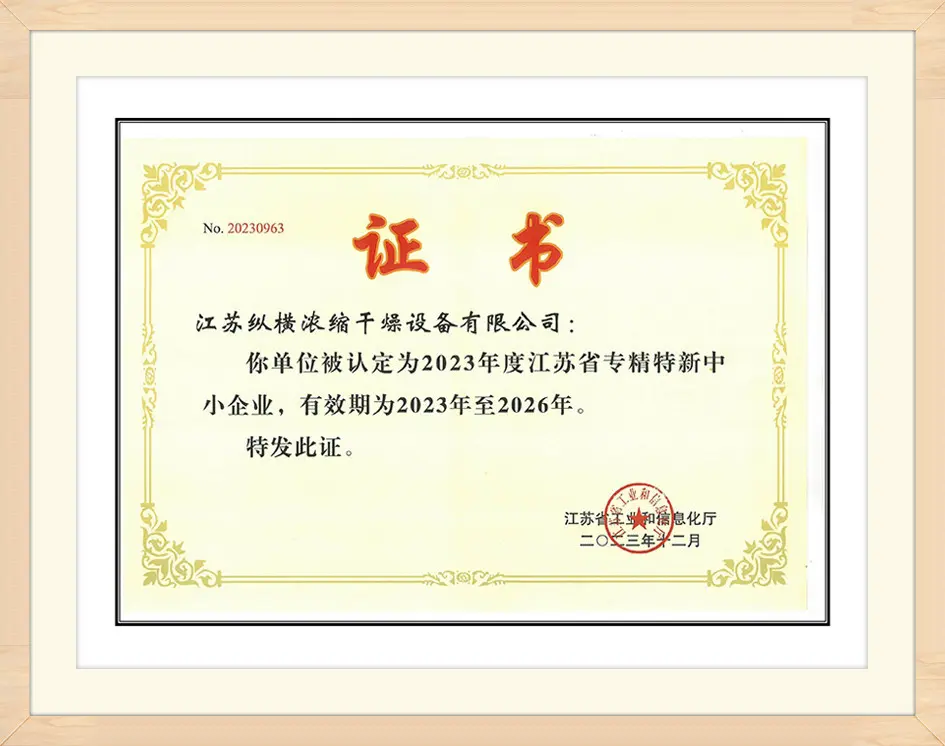
Pressure Vessel License
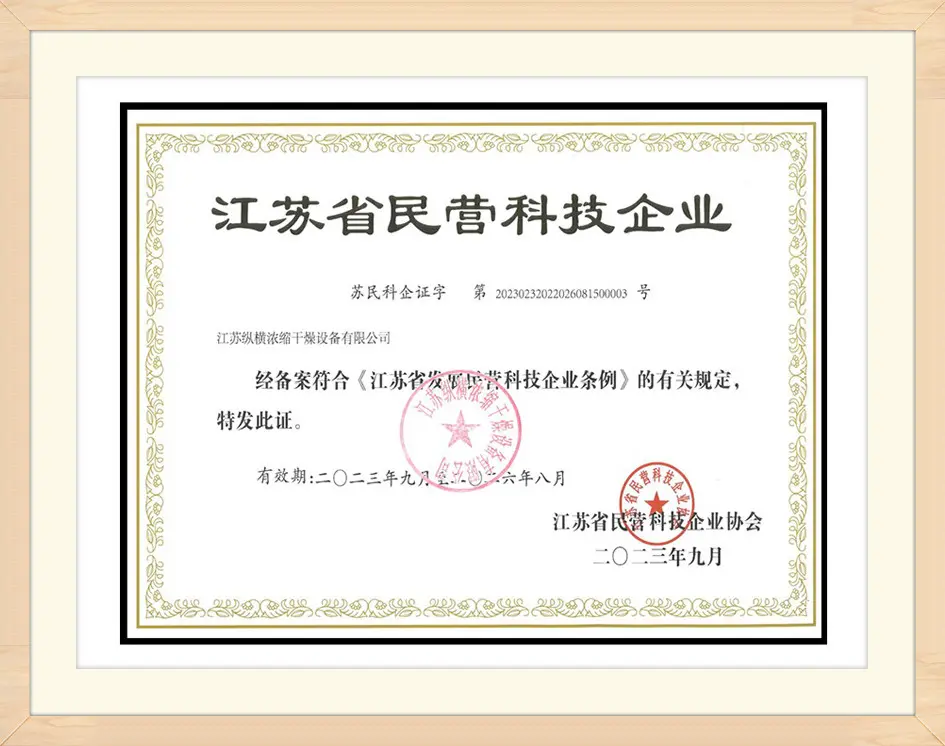
ASME U Stamp Certificate
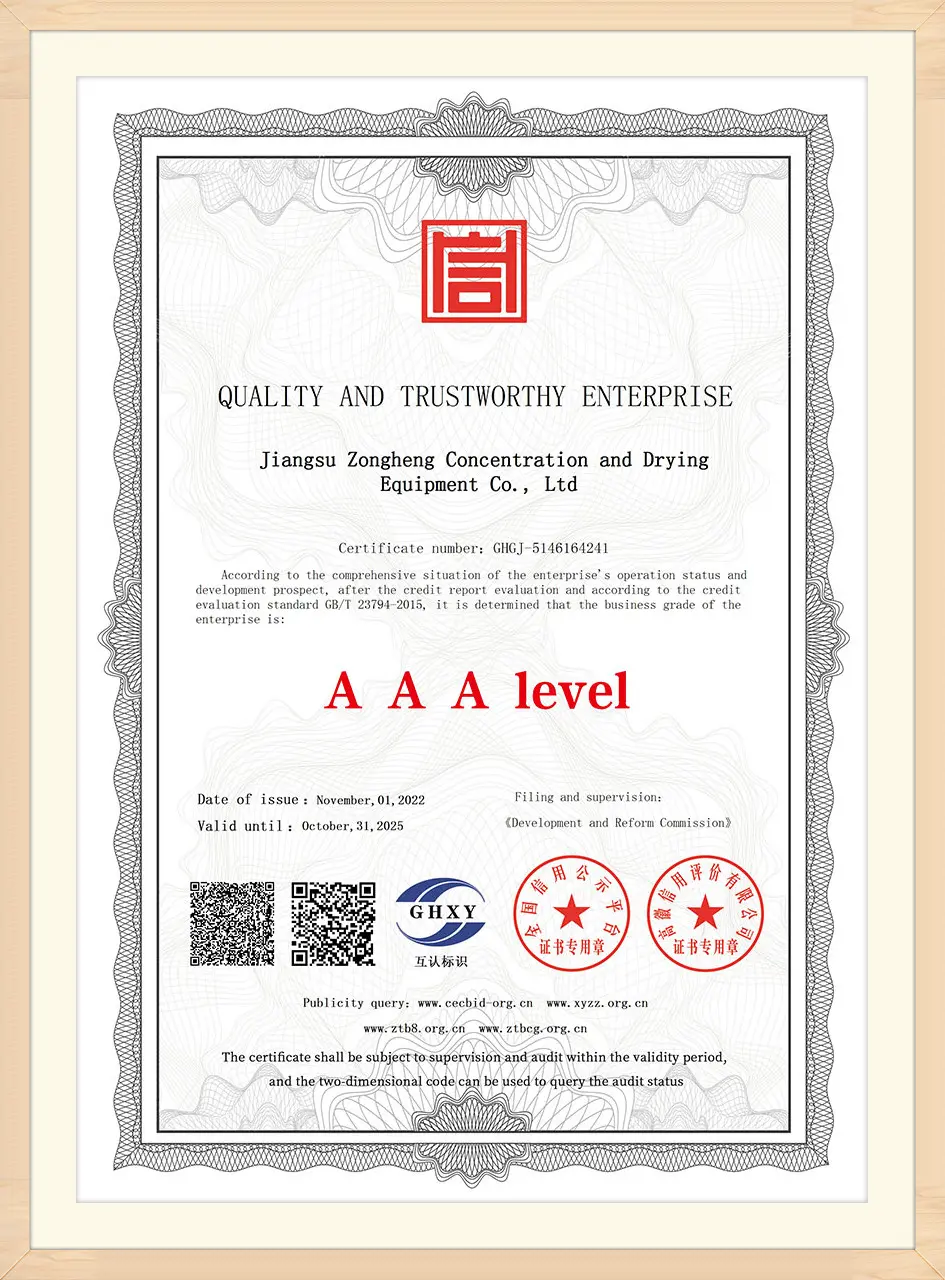
ISO Quality System
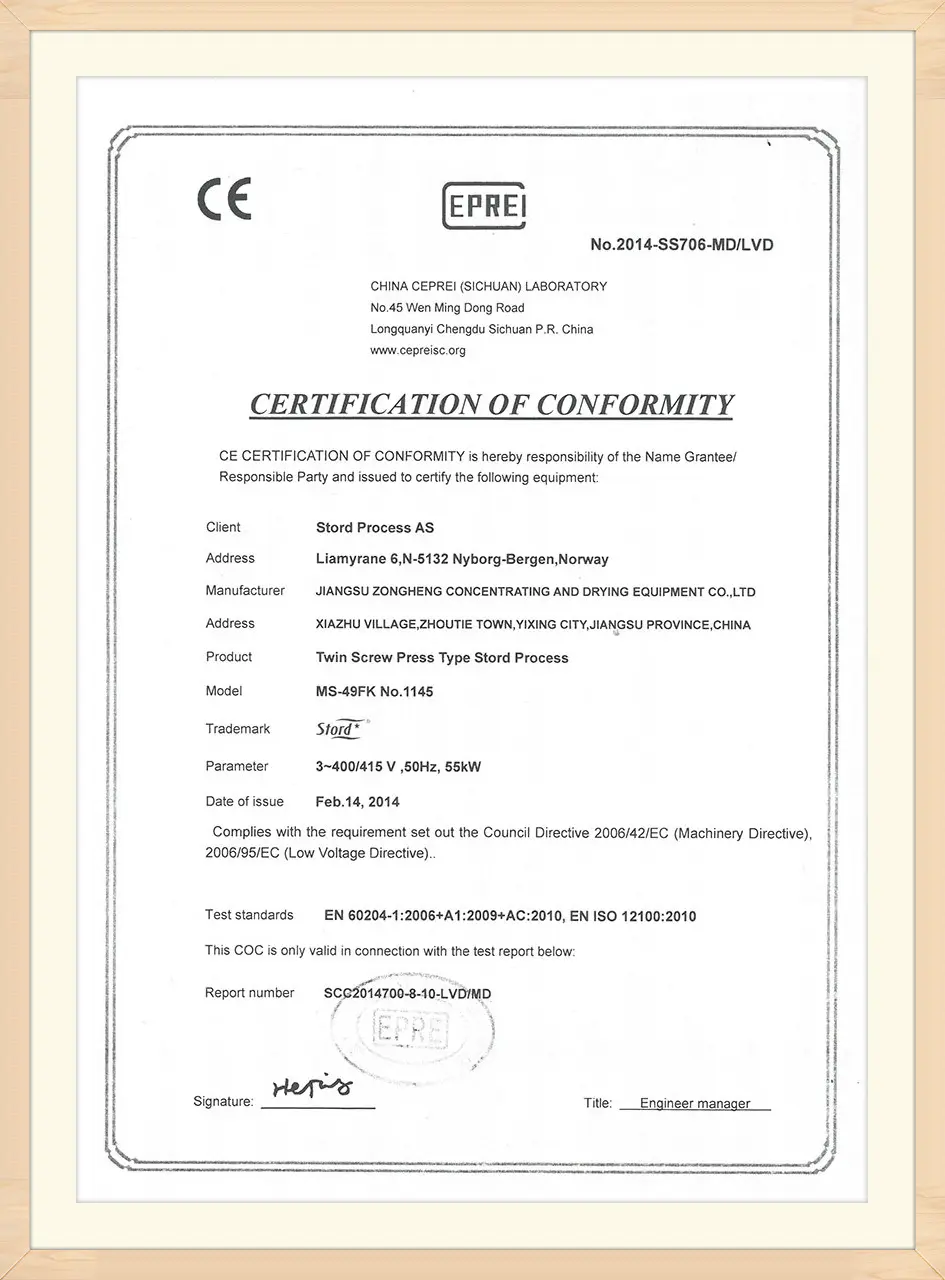
CE Safety Mark
From agricultural starch processing to industrial wastewater management, our systems are built for diverse industrial environments.
Concentration of corn steep liquor, starch washing, and high-efficiency product drying.
Dewatering and drying systems for alcohol distillery slops, recovering high-value animal feeds.
Thermal treatment of salts and dynamic crystal generation under strict process control.
Wastewater volume reduction, mineral salt crystallization, and water recovery systems.
Key operational and engineering answers regarding evaporator selection, thermodynamic limits, and efficiency configurations.
Contact our application engineering team today to receive a complete energy evaluation, custom layout design, and technical configuration proposal for your next project.
Discover our complementary starch refining, degerming, and specialized drying systems engineered for high throughput.
Maintains a controlled, low-oxygen atmosphere to safely dry organic compounds while minimizing energy loss.
Learn More
High-precision milling systems designed for dry and wet corn processing applications.
Learn More
Advanced multicyclone units optimized for washing starch slurry and separating fine impurities.
Learn More
Continuous mechanical dewatering systems built for long-term service in municipal and food processing plants.
Learn More
Engineered to deliver clean separation of corn germ and endosperm, optimizing processing yield.
Learn More
High-g-force hydrocyclone designs for the separation of protein and fine fibers from starch slurry.
Learn More
High-velocity, anti-fouling concentration plant designed for high-salinity and crystallizing applications.
Learn More
Heavy-duty screw shaft configuration designed to handle high mechanical torque during solid separation.
Learn More Zongheng