Premium solutions specifically optimized for high-performance corn processing plants and industrial mills across Argentina.
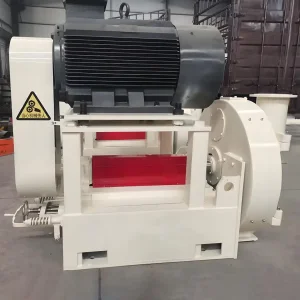
Engineered for wet corn processing, this heavy-duty mill achieves maximum germ separation efficiency with minimal starch loss, vital for Argentinian agricultural exporters.
Read More >
Designed specifically to split kernels and liberate germ without breakage, preserving germ oil content and optimizing downstream refinery streams.
Read More >
A flagship mill featuring adjustable disc clearance, low energy consumption patterns, and high throughput profiles for industrial food mills.
Read More >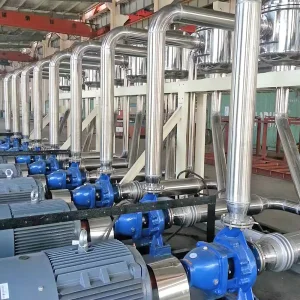
An essential multi-stage cyclone unit that guarantees maximum removal of soluble proteins and impurities, supplying market-grade starch products.
Read More >Argentina stands as a global agricultural powerhouse, consistently ranking among the top exporters of maize (corn) in the world. Key agricultural provinces, including Buenos Aires, Córdoba, and Santa Fe, are home to dense agricultural belts. Historically, much of the country's export revenue relied on raw grain shipping. However, the modern industrial transition has created a massive push towards value-added processing. Local agribusinesses are increasingly investing in sophisticated wet-milling and dry-milling infrastructures to convert raw starch into high-value starch derivatives, glucose, high fructose corn syrup (HFCS), bio-ethanol, and animal feed products like DDGS (Distillers Dried Grains with Solubles).
At the center of this transformation is the Degerming Mill. The primary process objective of any commercial maize wet mill is to separate the corn kernel into its four primary constituents: starch, germ (oil-bearing), fiber (hull), and protein (gluten). The germ, which contains roughly 45% to 50% oil, is a highly valuable asset. If the germ is crushed or ground too finely during the initial milling stages, the oil will bleed into the starch slurry, contaminating the final starch purity and making oil recovery impossible. This is why a precise, controlled degerming step is critical. Modern degerming mills utilize targeted impact and shearing actions to crack the pre-soaked (steeped) kernels, gently freeing the germ without tearing it, ensuring maximum yield and downstream quality.
Traditional degerming approaches often struggled with balancing throughput with kernel integrity. Standard impact mills frequently shattered the germ, leading to oil emulsification in the starch gluten mixture. Our engineering designs address this problem directly. Zongheng degerming mills combine adjustable stator-rotor clearances with customized impact pins that align with the hydraulic properties of steeped corn kernels. When the corn slurry enters the mill, the centrifugal force hurls the kernels against fixed and moving pins. The impact breaks the kernel at its natural point of weakness—where the starch body meets the elastic germ structure. This releases the germ intact, allowing it to float and be separated cleanly in downstream hydrocyclones.
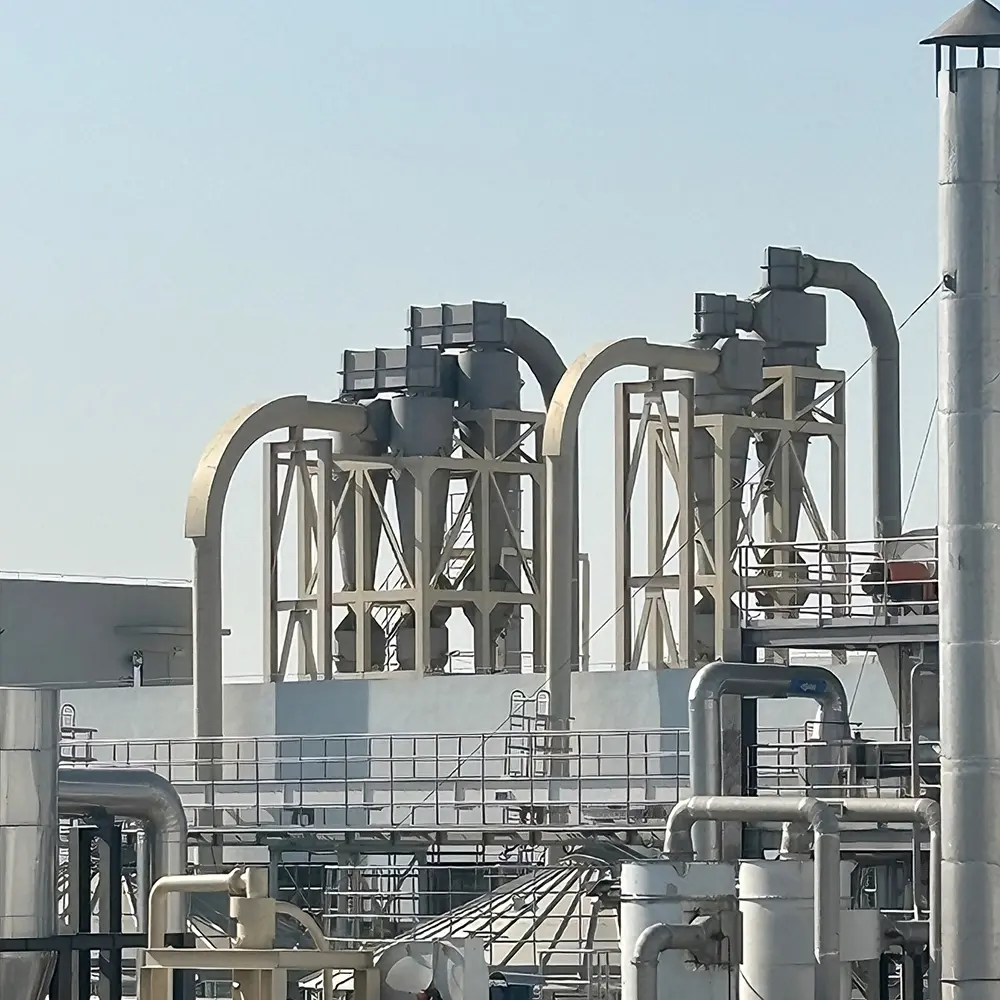
For wet milling plants in Argentina, managing moisture is as important as the extraction itself. Once the germ, fiber, and starch are separated, they must be rapidly dried to preserve nutritional value and prevent microbial growth. The integration of high-performance dryers, such as the MQG Airflow Dryer, ensures that the wet cake is instantly suspended in high-speed, hot-air streams. This impulse thermal transfer guarantees uniform drying in seconds, preserving product quality while reducing fuel consumption. It serves as an essential companion unit downstream from the degerming and starch extraction lines.
Get Custom Technical SpecificationsTo achieve high-efficiency separations, plants must evaluate motor load, rotational velocities, and disc profile engineering. Standard commercial processes demand continuous duty cycles under corrosive, acidic conditions (due to the presence of sulfur dioxide in the steeping water, yielding a pH between 3.8 and 4.2). Therefore, all contacting parts in our mills are constructed from high-grade stainless steel (AISI 304 or 316L) to prevent structural pitting and contamination.
| Parameter Type | Standard System Specification | Zongheng Industrial Optimization | Impact on Argentina Maize Plants |
|---|---|---|---|
| Material Construction | Carbon Steel / Standard Cast Iron | AISI 304 / AISI 316L Stainless Steel | Resists SO2 steeping acid, eliminating oxidation and extending life span. |
| Motor Rating | 55 kW to 90 kW | Up to 250 kW (Variable Frequency Driven) | Maintains consistent torque during variations in input crop density. |
| Rotor Speed | 1000 - 1200 RPM (Fixed) | 800 - 1800 RPM (Adjustable VFD) | Allows adjustment to accommodate soft/hard endosperm corn varieties. |
| Disc Clearance | Manual shim adjustment | Hydraulic automated precision control | Maintains strict particle size distribution under heavy load shifts. |
| Starch Recovery Rate | 95% - 97% | > 99.2% (Multi-stage integration) | Maximizes direct output revenue by converting waste into profit. |
Choosing the correct combination of mill configurations directly dictates the OPEX of the entire plant. By employing adjustable disc configurations and heavy-duty, dynamically balanced rotors, energy efficiency is enhanced by approximately 15% to 20% compared to legacy milling plants. Furthermore, down-time associated with pin replacement and balancing is minimized through rapid-access housing doors that can be opened without dismantling feed piping.
For industrial starch and bioethanol manufacturers in Buenos Aires, Santa Fe, and Córdoba, choosing a mill manufacturer involves navigating local industrial and regulatory challenges. Plants operate under strict federal environmental standards set by the Ministry of Environment and Sustainable Development, alongside local provincial water use and waste discharge guidelines. In wet-milling operations, wastewater management is highly critical. High chemical oxygen demand (COD) in wastewater streams requires energy-efficient separation and evaporation solutions to reduce waste volumes before environmental disposal.
This is where our comprehensive system engineering shows its value. By pairing our degerming mills with MVR (Mechanical Vapor Recompression) Evaporator Systems, plants can concentrate steepwater and wastewater streams with minimal steam consumption. The high-efficiency vapor compression loops recycle thermal energy inside the system, minimizing emissions and complying with strict local regulations. Additionally, for agricultural processing facilities processing raw starch for domestic consumption or export, all processing parts meet the food safety standards set by ANMAT (National Administration of Drugs, Food and Medical Technology) and SENASA (National Service for Agrifood Health and Quality).
Our localized support structure ensures that engineering blueprints, operational manuals, and instrumentation setups are provided in clear technical layouts. We collaborate with local Argentine service engineers and supply partners in major transport hubs to guarantee that critical wear parts—such as mill plates, bearings, cyclone cones, and screens—can be dispatched rapidly. This keeps plant downtime to a minimum during the heavy harvest seasons when continuous production is mandatory.
Procuring heavy grain processing machinery internationally requires a balance of engineering precision, robust materials, and capital efficiency. As a leading Chinese manufacturer, Jiangsu Zongheng brings over three decades of engineering experience to the Argentine market. Our modern production workshops feature advanced CNC machining centers, automated welding systems, and dynamic balancing testers. This enables us to manufacture heavy industrial equipment that competes with Western European standards, at a significantly more competitive capital expenditure (CAPEX).
Key highlights of our global supply chain and manufacturing capability include:
To understand the utility of these systems, we look at three distinct localized application scenarios where integrated milling, separation, and drying processes drive value:
Discover our range of industrial evaporators, tube dryers, and processing equipment designed to support grain wet-milling lines in Argentina.
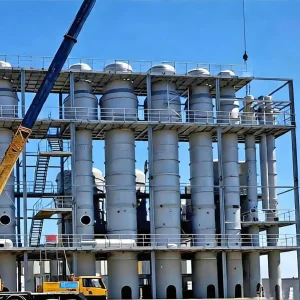
Designed to concentrate heat-sensitive steepwater streams, this system optimizes steam use and maintains high heat transfer coefficients.
Read More >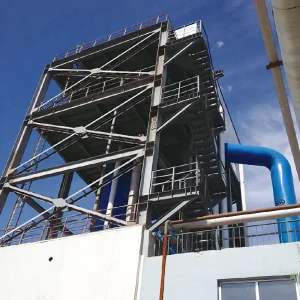
Utilizes mechanical vapor recompression to recycle latent heat, lowering energy costs for environmental treatment systems.
Read More >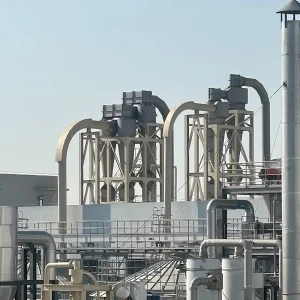
Dries wet corn starch cakes within seconds. The high-speed hot-air suspension system ensures even moisture control without thermal degradation.
Read More >
Custom multi-effect falling film and circulation evaporators built for processing corn steep liquor and bio-refinery wastewater streams.
Read More >
Designed to dry corn fiber, gluten meal, and organic agricultural byproducts, producing consistent moisture content ready for packaging.
Read More >
Reduces steam consumption by compressing and reusing secondary vapor, lowering energy requirements for wastewater evaporation plants.
Read More >
Designed for starch refinement, this unit uses centrifugal separation to remove fiber residues and light proteins from starch milk.
Read More >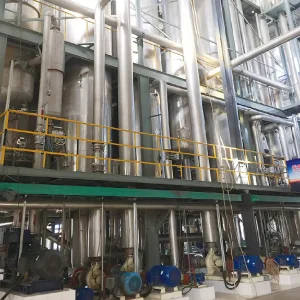
Engineered for high-viscosity liquids, this system uses high-flow circulation pumps to prevent fouling on tube walls.
Read More >Find answers to common technical and operational questions regarding corn wet-milling, starch extraction, and thermal drying systems.
Our degerming mills, under optimal steeping conditions (moisture content of 45-48% and sulfur dioxide concentration of 0.15-0.2%), achieve a germ recovery rate exceeding 98.5%. This process is designed to release the germ intact, keeping starch content within the recovered germ fraction below 12% dry basis.
MVR (Mechanical Vapor Recompression) plants require significantly less energy. While a standard five-effect evaporator consumes approximately 0.2 to 0.25 tons of steam per ton of water evaporated, an MVR system uses mechanical energy (electricity) to compress the secondary vapor, recycling the latent heat. This reduces fresh steam consumption to nearly zero during stable operations, consuming approximately 15-20 kWh of electricity per ton of water evaporated.
Yes, our manufacturing facility is authorized to design and fabricate pressure vessels under the ASME "U" Stamp and has maintained ISO9001:2015 quality management system certification. Our evaporation systems, dryers, and centrifugal mills exported to South America and Europe are designed and certified to CE standards where required.
We provide engineering support that includes detailed layout drawings, foundation guidelines, and piping schematics. Our engineers are available to coordinate installation, supervise system commissioning, and train local operations teams either on-site in Argentina or via remote technical support.
Starch purity is maintained using a multi-stage counter-current washing method. The system uses a series of 9 to 12 cyclone stages. Clean wash water is added at the final stage and flows counter-currently to the starch milk. This separates soluble proteins, fibers, and minerals, yielding high-purity starch slurry with a protein content below 0.35% dry basis.
Get in touch with our engineering team for customized sizing, flow calculations, and budget estimates for your upcoming grain processing facility expansions.
 Zongheng