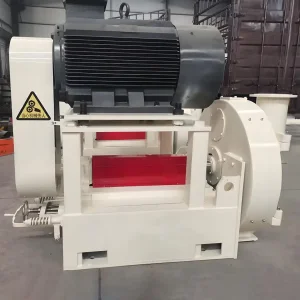
Specially customized for Switzerland's starch manufacturers, guaranteeing maximum kernel break down and high-purity germ separation.
Explore Product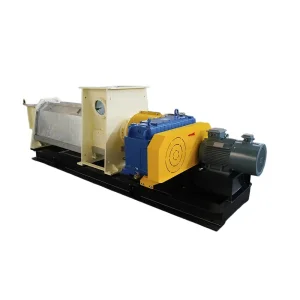
Delivers continuous pressure dewatering to optimize fiber and feed cake moisture contents within Swiss starch processing configurations.
Explore Product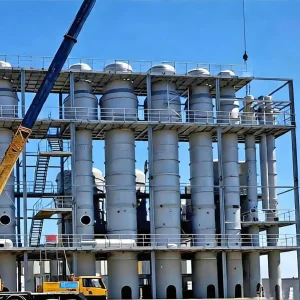
Designed with Multi-Effect technology to reduce thermal energy footprints in compliance with Swiss national energy targets.
Explore Product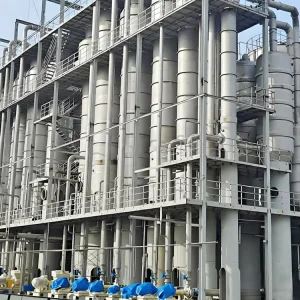
Leverages waste vapors from dryers, drastically cutting primary steam consumption in zero-liquid-discharge (ZLD) Swiss processes.
Explore ProductSwitzerland's food, agricultural, and biochemical sectors operate in one of the most resource-conscious, high-cost environments in the world. With stringent federal policies governing energy consumption (such as the Swiss Energy Strategy 2050) and highly defined targets for circular economies, industrial processing sites in Basel, Zürich, Valais, and Geneva demand machinery that yields maximum output with minimum waste. Wet milling of maize and wheat forms the structural foundation for many biochemical, pharma, and animal feed industries. In these processes, separating the germ from the endosperm with absolute precision is vital. The germ contains valuable oils, while the endosperm houses the starch. Any contamination of the starch slurry with germ fragments reduces final product purity, while starch left on the germ reduces yield and efficiency.
Modern Swiss processors are shifting away from energy-intensive legacy mills to intelligent, high-throughput systems. The challenges of handling complex, variable agricultural raw materials require degerming mills that combine structural stability, flexible plate-gap regulation, and low mechanical friction. By integrating specialized disc mill designs, Swiss operations can reduce processing bottlenecks and optimize downstream processes, including drying and multi-stage washing cyclones.
A high-performance degerming mill operates on the principle of impact and shear forces. The wet-steeped corn kernels are introduced axially into the center of the mill, where they pass between a stationary disc and a high-speed rotating disc. The discs are equipped with strategically patterned metal teeth (or plates) designed to strip the outer fiber and loosen the starch matrix without crushing the elastic germ. Key process parameters include:
Years of Engineering Experience
Expert Mechanical & Thermal Engineers
Total Factory Area (sqm)
Production Plant Area (sqm)
A degerming mill does not operate in isolation. In a world-class Swiss processing facility, it functions as the entry gate to a complex, multi-stage separation loop. After the milling phase, the mixture is separated through germ cyclones, which segregate the lighter germ from the heavier starch and fiber slurry. The recovered germ is then routed to a Single Screw Press to reduce moisture levels down to 45-50% before drying. The starch slurry is pumped through multi-stage Starch Washing Cyclones, purifying the starch from protein gluten residues.
Simultaneously, the liquid streams are processed through advanced thermal concentration systems. Water from starch washing and steep steps (containing corn steep liquor - CSL) represents a valuable process byproduct. Utilizing MVR Evaporation Plants or Falling Film Evaporators allows manufacturers to concentrate this wastewater, recovering solids for animal feed while generating pure clean condensate that is recycled back into the steeping tanks. This circular flow highlights why Swiss operators demand an integrated systems partner rather than just a machine supplier.
Steeping corn kernels in sulfur dioxide (SO2) solution softens the grain, breaking protein bonds and preparing the endosperm for physical impact. This process makes the germ elastic and robust, protecting it from destruction during the primary mill pass.
Wastewater and wash streams are condensed using Multi-Effect Falling Film Evaporators. Concentrated steep liquor is mixed with dried fiber to form high-nutrition gluten feed, ensuring no organic materials leave the production floor as waste.
Swiss factories must operate under strict regulatory supervision. Safety and environmental compliance are non-negotiable points of entry for any supplier:
Yixing Yangxi Light Industrial Machinery Factory was established with 45 employees, laying the foundation for our current large-scale operations.
Obtained ISO9001 quality system certification, standardizing manufacturing processes and paving the way for international exports.
Officially certified as a Jiangsu Provincial High-Tech Enterprise, reinforcing our commitment to research and technological development.
Obtained the Special Equipment Manufacturing License of the People's Republic of China, certifying our capability to produce high-pressure vessels.
Authorized to use the ASME "U" Stamp. This certification allowed us to export high-pressure evaporators and dryers directly to Western markets.
Expanded manufacturing facilities to over 54,000 square meters. Integrating advanced digital controls and IoT monitoring into our degerming mills.
For European and Swiss industrial buyers, procurement is a balancing act between initial capital expenditure (CAPEX), long-term operational efficiency (OPEX), and supply chain risk. Jiangsu Zongheng Concentrating and Drying Equipment Co., Ltd offers a compelling solution to this challenge. Located in Zhoutie Town, Yixing City, on the shores of Taihu Lake, our state-of-the-art facility spans over 54,000 square meters of production space. Here, we leverage the raw materials access, manufacturing clusters, and engineering talent of China's primary industrial zones to produce premium-grade equipment.
Our supply chain resilience is rooted in our in-house control over key production steps. From plate casting and precision CNC milling to welding under ASME specifications and non-destructive testing (NDT), we reduce dependency on third-party sub-suppliers. This integration allows us to keep lead times short, guarantee structural tolerances, and keep costs competitive. For a Swiss operator, this translates to purchasing high-grade, long-lasting capital equipment with substantial cost savings, freeing up capital to invest in local system integration and automation.
When purchasing a degerming mill or integrating an evaporation plant, procurement teams must look past the initial price tag to evaluate the following parameters:
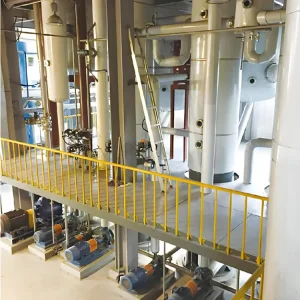
Maintains product quality with short residence times, ideal for glucose and amino acid concentrations.
Explore Product
Reduces COD loads by concentrating thin stillage and industrial wastewater streams.
Explore Product
Robust thermal efficiency profiles designed to handle complex chemical and dairy feedstocks.
Explore Product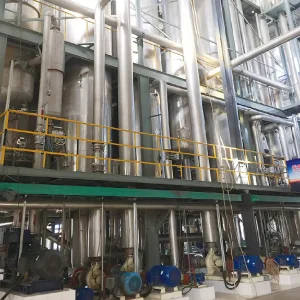
Prevents tube fouling under high solids concentrations, ensuring reliable crystallization.
Explore Product
Integrates secondary heat sources to lower thermal energy requirements.
Explore Product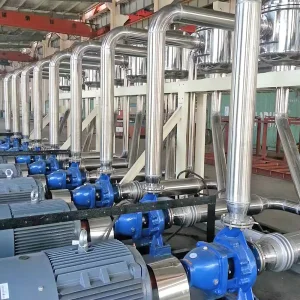
Delivers high-efficiency counter-current washing, removing proteins from starch slurry.
Explore Product
Engineered for high boiling point elevations and concentrated industrial salts.
Explore Product
Fully compliant with EU directives and Swiss safety guidelines for immediate installation.
Explore ProductWet degerming mills utilize a combination of pre-steeping and controlled mechanical shear. Steeping absorbs moisture, swelling the germ and making it elastic. The mill's disk topography is engineered with large, blunt tooth designs that impact and roll the kernel, breaking the brittle starch endosperm apart while releasing the elastic germ intact.
Under continuous operations with corn steeped in sulfur dioxide, high-alloy steel plates typically last between 1,200 to 2,000 operating hours. Replacement is simplified by our hinged door structure: loosening the front bolts swing the door open, allowing technicians to swap plate segments without removing the entire rotor assembly, reducing downtime to less than an hour.
Yes. While primarily optimized for wet corn degerming, adjusting the plate clearances and replacing the plate tooth geometry allows the mill to process steeped wheat, sorghum, and barley. This versatility makes it suitable for diverse food processing and bio-refinery plants.
Absolutely. We build all equipment intended for combustible environments with certified explosion protection features. This includes ATEX-compliant motors, ground monitoring points, spark-resistant materials, and specialized bearings designed to operate without creating friction heat, protecting your plant from dust explosion hazards.
From initial process calculations to engineering designs and installation, Jiangsu Zongheng delivers high-efficiency machinery to meet Swiss quality, safety, and energy targets.
 Zongheng