Explore our engineering capabilities spanning across industrial evaporators, solid-liquid separation solutions, and thermal drying systems.
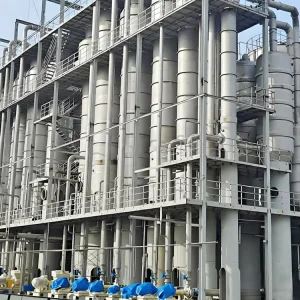
High efficiency concentration of corn steep liquor and complex wastewater treatment solutions.
View Details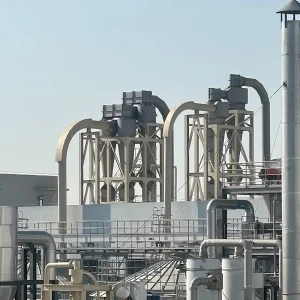
High-speed hot air drying solutions for continuous powder processing and moisture reduction.
View Details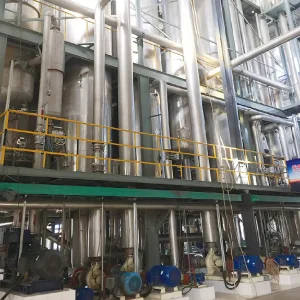
Engineered for high fouling liquids, viscous fluids, and crystallization processes.
View Details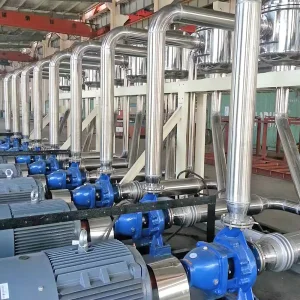
High-precision starch refining, concentration, and impurity removal cyclones.
View Details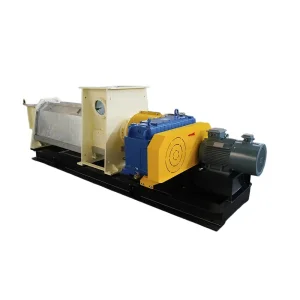
Continuous mechanical dewatering for high-solids applications and organic slurries.
View Details
Integration of multiple waste heat streams for energy conservation and plant optimization.
View Details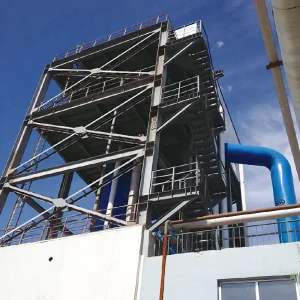
State-of-the-art Mechanical Vapor Recompression system featuring low utilities consumption.
View Details
Reliable crystallization and heavy duty waste concentration for chemical and pharma.
View DetailsA comprehensive technical brief on thermal efficiency, design criteria, and environmental compliance.
In modern process industries, the necessity for energy conservation and minimal environmental footprints has positioned Mechanical Vapor Recompression (MVR) Evaporators as the benchmark for concentration and crystallization technologies. By utilizing the principle of thermodynamic recycling, MVR systems reclaim the latent heat of secondary vapor, dramatically lowering external steam demand. Compared to conventional multi-effect evaporators, which rely heavily on direct live steam injection, MVR technology compresses evaporated vapors using a mechanical compressor, elevating their temperature and pressure profiles to re-use them as the heating source for the process fluid. This closed-loop thermal cycle provides an unparalleled Coefficient of Performance (COP) and slashes operating expenses by up to 60-80%.
The core operating mechanism of an MVR evaporator rests on the basic laws of thermodynamics. When a solvent (typically water) evaporates from a feed solution, it carries a substantial amount of latent heat. Instead of condensing this vapor via an external cooling water tower, the vapor is routed to a centrifugal compressor or a roots blower. The mechanical compression increases both the saturation temperature and the pressure of the vapor. Once compressed, this high-energy vapor is directed back to the shell side of the heat exchanger (calandria), where it condenses, giving off its latent heat to boil the incoming feed solution on the tube side. The condensed vapor leaves the system as clean distillate, and the process continues with minimal external power input, only requiring the electricity to drive the compressor motor.
| Performance Metric | MVR Evaporator System | 3-Effect Multi-Effect Evaporator (MEE) | 5-Effect Multi-Effect Evaporator (MEE) |
|---|---|---|---|
| Steam Consumption (per ton H₂O evaporated) | 0 kg (Startup steam only) | 350 - 400 kg | 200 - 240 kg |
| Power Consumption (per ton H₂O evaporated) | 15 - 28 kWh | 2 - 4 kWh | 3 - 5 kWh |
| Cooling Water Requirement | Minimal to None | High (requires cooling tower) | Moderate to High |
| Operating CO₂ Footprint | Extremely Low (Grid-dependent) | High (Boiler combustion-dependent) | Medium-High |
| Typical Payback Period | 1.2 - 2.5 Years | Reference Baseline | 3 - 4 Years |
To successfully integrate MVR evaporators within European and global high-safety markets, compliance with the CE Mark directives is mandatory. As complex pressure systems operating at varying pressures and temperatures under mechanical stress, MVR evaporators fall under several critical European directives:
Ensures that all pressure vessels, pipes, and safety accessories are designed, fabricated, and non-destructively tested (NDT) to withstand maximum operating limits without risk of catastrophic rupture.
Governs the design and structural integrity of rotating components, mainly the compressor shafts, safety guards, automated control loops, and structural frameworks to protect operators.
Applies to electrical control cabinets, VFD arrays, and process automation loops, ensuring they prevent electrical hazards and demonstrate strong electromagnetic compatibility.
As a global supplier, we execute comprehensive risk assessments, third-party welding procedure qualifications (WPQR), and hydrostatic pressure tests. Every plant is certified to handle complex stress loads and thermal expansions, ensuring safe operational performance within strict Western Europe jurisdictions.
Analyzing next-generation developments in thermodynamic efficiency, automation, and material science.
The trajectory of Mechanical Vapor Recompression technology is defined by advancements in digital automation, metallurgy, and high-ratio turbo-compressors. In traditional plants, process instabilities such as fluctuating feed concentration or sudden temperature drops could cause compressor surge. Modern systems mitigate this through smart predictive automation algorithms.
By leveraging dynamic process models and real-time feed sensors, PLC/SCADA systems predict boiling point elevation (BPE) changes. The system automatically adjusts VFD frequencies, vapor compression ratios, and feed inlet valves to maintain peak thermal efficiency without manual intervention.
We are transitioning from traditional roots blowers to high-efficiency single-stage centrifugal turbo-blowers and magnetic levitation steam compressors. These offer higher pressure rises per stage (up to 20K or more) with oil-free operation, preventing process steam contamination.
Future iterations focus on preventing calcium, silica, and organic fouling in the heat transfer tubes. We apply specialized electro-polishing treatments, use falling-film configurations, and deploy online ultrasonic cleaning systems to maintain maximum heat transfer rates.
Deploying energy-efficient concentration solutions for starch, alcohol, chemicals, and industrial wastewater.
MVR evaporators are critical components in macro-level municipal and industrial resource conservation strategies. By transforming waste liquid into clean water and dry crystalline residues, these systems facilitate Zero Liquid Discharge (ZLD) schemes globally.
Jiangsu Zongheng's state-of-the-art facility in Yixing City.
Established in 1992 (originally known as Yixing Yangxi Light Industry Machinery Factory), Jiangsu Zongheng Concentrating and Drying Equipment Co., Ltd. has developed into a high-tech manufacturing center. Located on the shores of Taihu Lake in Zhoutie Town, Yixing, the facility spans over 54,000 square meters. The company's capabilities are backed by advanced production resources, including:
Established as Yixing Yangxi Light Industrial Machinery Factory, covering 15 mu of land with 45 initial employees, serving regional chemical and agricultural processing industries.
Obtained international ISO9001 certification, standardizing manufacturing processes and material traceability.
Recognized as a Jiangsu Provincial High-Tech Enterprise, marking expansion into R&D-focused thermal equipment design.
Obtained the Special Equipment Manufacturing License of the People's Republic of China (License No.: TS2232C42) for Category III medium & low-pressure vessels.
Acquired the ASME U-Stamp, qualifying the factory to design and manufacture heavy-duty thermal processing equipment for US, EU, and global energy markets.
Obtained Certificate No. 45021, aligning local operations with global safety, quality assurance, and mechanical validation protocols.
Equipped with 22,000+ m² of heavy production workshops, 3 senior engineers, 20+ specialized engineers, and 120 skilled technicians, delivering CE-compliant MVR systems globally.
Addressing the critical engineering requirements for global EPCs, procurement officers, and plant operators.
Procuring heavy industrial equipment like MVR evaporators requires balancing capital expenditure (CAPEX) with long-term operational costs (OPEX). Technical managers prioritize several key design factors during sourcing:
Detailed engineering answers for system designers, procurement specialists, and plant operators.
Discover our range of complementary equipment for downstream concentration, dewatering, and thermal drying.
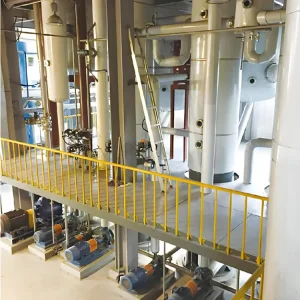
Designed for heat-sensitive liquids, offering short residence times and high heat transfer coefficients.
View Details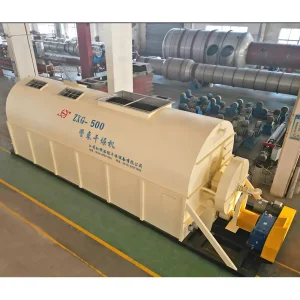
Efficient indirect steam heating dryer designed for industrial starches, fibers, and organic residues.
View Details
Optimized multi-cyclone systems for washing, concentration, and refining of starch slurries.
View Details
High-efficiency flash drying system designed for rapid moisture reduction in free-flowing powders.
View Details
Engineered flash drying equipment for sensitive organic materials and industrial starches.
View Details
CE-certified forced circulation evaporation and concentration systems for high-pressure processes.
View Details
Heavy duty forced-flow evaporative plants engineered for industrial wastewater and crystallization.
View Details
Advanced vapor recompression systems offering significant energy and utility savings.
View DetailsContact our technical engineering team for customized design proposals, thermal calculations, and equipment quotes.
 Zongheng