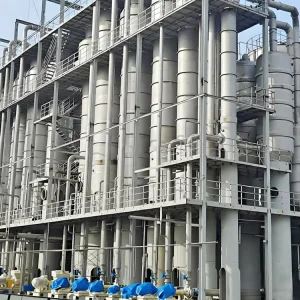
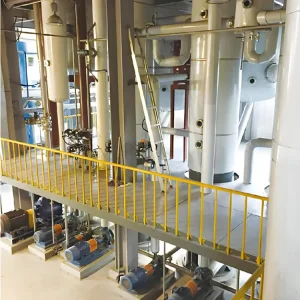
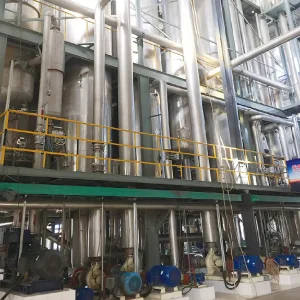
In modern process engineering, Multi-Effect Evaporation (MEE) stands as one of the most thermo-dynamically robust methodologies for separation, concentration, and resource recovery. Operating on the principle of utilizing latent heat from boiled-off vapor, MEE cascades steam energy through consecutive pressure-reduced chambers. This thermal staging decreases the boiling point of the medium progressively, yielding unmatched energy efficiency compared to single-stage units.
At Jiangsu Zongheng Concentrating and Drying Equipment Co., Ltd., we fuse three decades of thermal engineering heritage with advanced mathematical modeling. By deploying customized Falling Film, Forced Circulation, and Mechanical Vapor Recompression (MVR) technologies, we help worldwide process industries transition to low-footprint, carbon-conscious operations. Our machinery is engineered to counter processing challenges such as high boiling point elevation (BPE), severe scaling, and high-viscosity fluid dynamics.
Modern manufacturing demands solutions that combine process efficiency with environmental stewardship. Jiangsu Zongheng designs turnkey packages that operate as integral nodes in a circular economy, minimizing effluent discharge and maximizing byproduct recovery.
We configure multi-stage evaporators paired with crystallizers to process high-salinity industrial wastewater from chemical plants, battery manufacturers, and petrochemical facilities, recovering clean distillate and dry salts.
Optimized evaporation of starch derivatives (glucose, maltose, dextrose), organic acids, and proteins. Our heat-sensitive liquid evaporators utilize ultra-low residence times to safeguard product quality, taste, and functionality.
Integrated concentration solutions for corn vinasse (thin stillage) in dry-grind ethanol distilleries. We utilize waste heat from dryer exhausts and turbine exhausts to run the multi-effect evaporator loop, minimizing utility footprints.
Across Europe, North America, and the Asia-Pacific region, the demand for industrial concentration is shifting from fossil-fuel-intensive thermal plants to integrated, low-OPEX configurations. With carbon tax frameworks like the EU Carbon Border Adjustment Mechanism (CBAM), processors are phasing out inefficient thermal evaporators in favor of highly optimized Multi-Effect arrangements combined with Mechanical Vapor Recompression (MVR) or Thermal Vapor Recompression (TVR).
As a leading Chinese supplier, Jiangsu Zongheng bridges the gap between premium engineering and cost-competitive manufacturing. China's industrial clustering allows us to source high-grade alloys—including Duplex 2205, Duplex 2507, Titanium Grade 2, and Hastelloy—with minimal logistics lag. Our 54,000-square-meter facility executes precision tube sheet machining, automated orbital welding, and non-destructive testing (NDT) to deliver ASME-compliant systems at a fraction of Western capital expenditure.
Every fluid exhibits unique rheological properties, boiling point curves, and scaling tendencies. To ensure long runtime intervals and minimal thermal degradation, the correct heat exchanger layout must be selected:
Ideal for: Heat-sensitive, low-viscosity solutions (e.g., starch syrups, fruit juices, dairy, light wastewater).
Mechanics: Feed liquid is introduced at the top, distributed evenly via high-precision spray nozzles, and flows downward as a thin turbulent film on the inner walls of the heating tubes. Vaporization occurs inside the film, minimizing hydrostatic head effects.
Key Advantage: Extremely short residence time (seconds per pass) and high heat transfer coefficients under low temperature differences.
Ideal for: Highly viscous media, saline wastewater, crystallizing solutions, and scaling liquids.
Mechanics: Fluid is circulated at high velocities through the heat exchanger tubes by a high-capacity axial flow pump. The static pressure at the tube outlet prevents boiling inside the tubes. Boiling occurs only when the liquid flashes into the separator chamber.
Key Advantage: Prevents premature fouling, scaling, and tube blockage by keeping crystallizing solids suspended in the slurry.
Ideal for: Large capacity installations looking for minimal steam consumption.
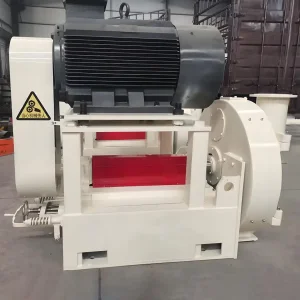
Mechanics: Mechanical Vapor Recompression utilizes a high-efficiency centrifugal fan or roots blower to compress the vapor generated within the evaporator. This process raises the vapor's temperature and pressure, allowing it to be recycled as the heating source for the same effect.
Key Advantage: Reduces live steam consumption close to zero, utilizing electricity as the primary driving energy source.
A complete industrial concentration line depends on the seamless integration of feed preparation, primary evaporation, product drying, and mechanical dewatering equipment. Jiangsu Zongheng manufactures the entire equipment string to ensure optimal process control and mechanical alignment:
Jiangsu Zongheng's MQG Airflow Dryer employs high-speed hot air to suspend and fluidize the material. By utilizing impulse airflow generated from precisely varied tube diameters, it continuously tumbles the particles while conveying them. This design ensures rapid, uniform, and efficient drying throughout the entire transportation process within the system.
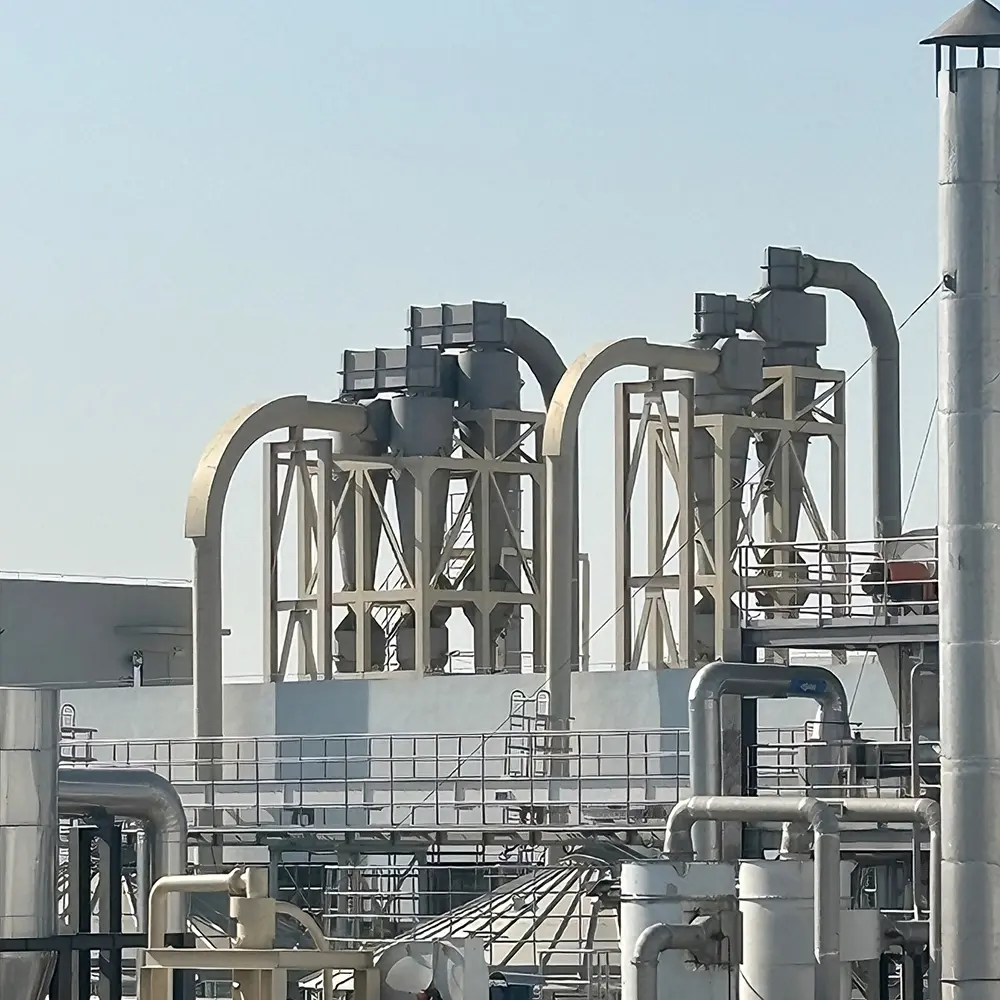
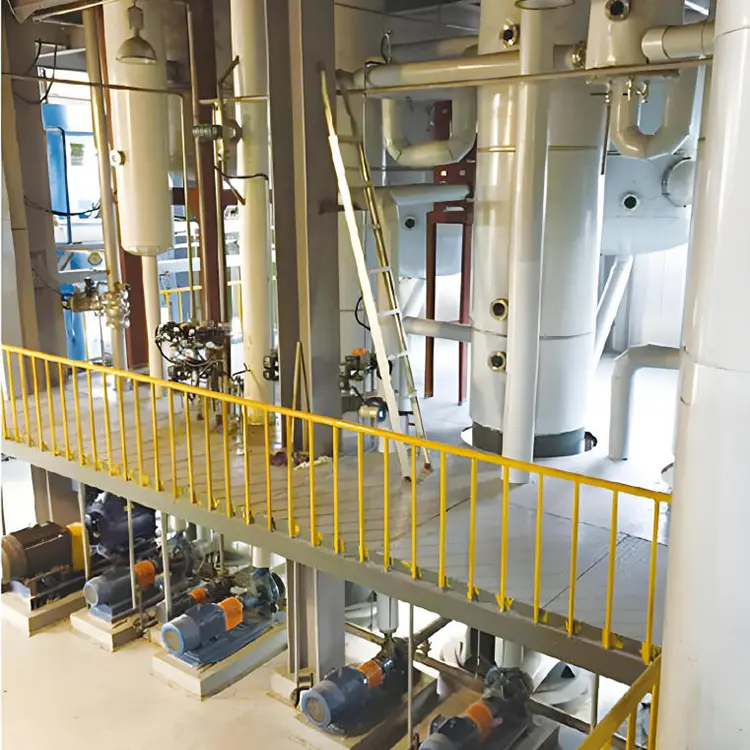
A falling film evaporator efficiently concentrates heat-sensitive liquids. The feed liquid forms a thin film flowing down heated vertical tubes, where it partially evaporates. Vapor generated flows parallel to the liquid, enhancing the process. It ensures a short residence time and low operating temperature, preserving product quality. The system requires proper liquid distribution and complete surface wetting to prevent fouling and maintain high thermal efficiency and operational stability.
Jiangsu Zongheng Concentrating and Drying Equipment Co., Ltd. (formerly known as Yixing Yangxi Light Industry Machinery Factory) was founded in 1992. Nestled in Zhoutie Town, Yixing City, along the coast of Taihu Lake, our state-of-the-art facility occupies more than 54,000 square meters, featuring 22,000 square meters of specialized production workshop space.
We are a modern high-tech enterprise specializing in the fabrication of concentration, drying, starch extraction, bio-ethanol DDGS, and Category III medium & low-pressure vessels. As a long-standing member of the China Starch and Alcohol Association, our machinery serves global brands in the fermentation, starch, chemical, pharmaceutical, waste treatment, and petrochemical sectors.
Established as Yixing Yangxi Light Industrial Machinery Factory, covering 15 mu of land with 45 employees.
Achieved ISO9001 Quality Management System standard certification.
Designated as a High-Tech Enterprise of Jiangsu Province.
Earned the prestigious ASME "U" Stamp authorization from the American Society of Mechanical Engineers.
Expanded operations to 54,000+ sqm, employing 3 senior thermal engineers, over 20 professional design engineers, and 120+ skilled specialists.
Operating pressure equipment across global borders demands absolute adherence to safety and mechanical standards. Jiangsu Zongheng ensures that every vessel is calculated, tested, and documented in accordance with destination-specific codes.
Our manufacturing facility holds the ASME 'U' Stamp and the Special Equipment Manufacturing License of the People's Republic of China (License No.: TS2232C42) for Category III medium & low-pressure vessels. For European installations, we engineer evaporators to meet the Pressure Equipment Directive (PED) 2014/68/EU and carry full CE certification.
We provide comprehensive installation supervision, commissioning, and Operator Training. Our engineering teams perform localized Factory Acceptance Testing (FAT) and Site Acceptance Testing (SAT) alongside local inspectors, ensuring hassle-free startup and compliance with national occupational safety and health standards.
As carbon mitigation shapes the future of heavy industries, Jiangsu Zongheng is actively developing and piloting next-generation evaporation and drying technologies focused on thermal efficiency and decarbonization:
By pairing multi-effect stages with an MVR compressor, we can process highly complex streams containing multi-salt mixtures. The multi-effect setup acts as a concentrator, while the MVR loop handles crystallization, maximizing energy savings.
Applying advanced nano-coatings and laser-texturing techniques to the inner surfaces of heat exchanger tubes. These surfaces repel salt precipitates and protein foulants, extending runtime periods between CIP cycles by up to 200%.
Integrating sensors and IoT links to run real-time Aspen-based models. These programs monitor temperature changes across effects, automatically adjusting steam feed rates and system pressure to maintain product quality under varying input concentrations.
Boiling Point Elevation (BPE) refers to the phenomenon where a solution boils at a higher temperature than pure water at the same pressure, caused by dissolved solids. In a Multi-Effect Evaporator, BPE reduces the effective temperature difference (ΔT) available for heat transfer across each effect. For example, if a 4-effect system has a total temperature gap of 60°C and each effect exhibits a 5°C BPE, the net driving force drops by 20°C, leaving only 40°C for actual heat transfer. Correctly calculating and compensating for BPE via heat exchange surface margins is essential to achieving design capacity.
Steam economy is defined as the kilograms of water evaporated per kilogram of live steam supplied to the first effect. As a rule of thumb: a single-effect evaporator yields approximately 0.9–0.95 economy; a double-effect yields 1.6–1.9; a triple-effect yields 2.4–2.8; a quadruple-effect yields 3.2–3.8; and a quintuple-effect can reach 4.2–4.8. Adding more effects increases energy efficiency but increases capital costs, requiring detailed cost-benefit modeling based on local steam prices.
We employ a multi-layered scaling prevention strategy: First, we utilize high-velocity Forced Circulation systems to maintain solid crystals in suspension and scour the tube walls clean. Second, we integrate automatic Clean-in-Place (CIP) chemical washes and forward-feed sequences to wash away deposits before crystallization occurs. Third, for highly challenging feeds, we configure falling film setups with low-temperature differentials and optimized liquid distribution plates to avoid dry spots on heat-exchange surfaces.
Depending on chlorides, acid concentrations, and operating temperatures, we fabricate systems using Stainless Steel 304, 316L, Duplex 2205, Duplex 2507, Titanium Grade 2, and specialized superalloys like Hastelloy C276. Every material option is certified with chemical and physical Mill Test Reports (MTR) to guarantee corrosion resistance.
Connect directly with our senior process engineers. We provide comprehensive thermal calculations, mass balances, and detailed 3D CAD design options tailored to your specific application requirements.
 Zongheng