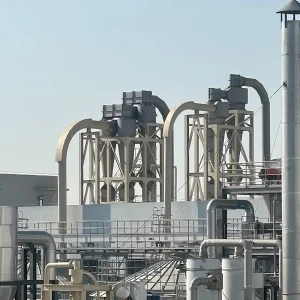
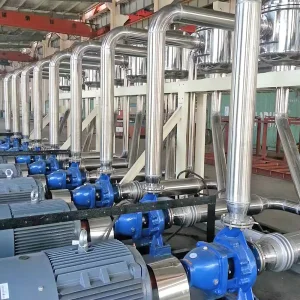
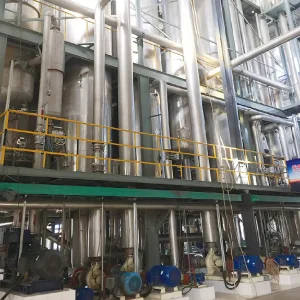
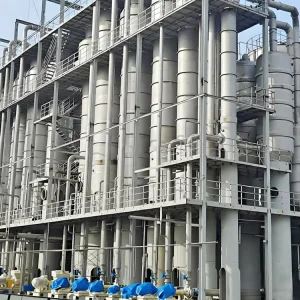
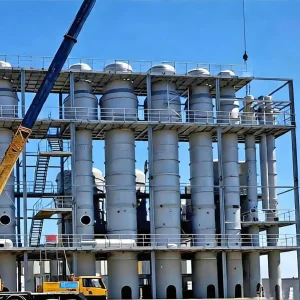
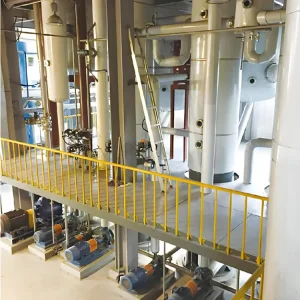
In modern industrial processing, concentration techniques dictate both final product quality and the operational carbon footprint. The Rising Falling Film Evaporator represents a highly specialized mechanical design developed to handle fluids with varying viscosity profiles, high scaling tendencies, and significant sensitivity to prolonged heat exposure. By combining the upward convective velocities of rising film designs with the high thermal transfer rates and minimal liquid holdup of falling film configurations, these advanced plants optimize thermodynamic pathways, making them a preferred alternative to standard multi-effect evaporators in complex concentration lines.
On a global scale, chemical refining, starch derivative processing, biological ethanol production, and environmental waste management installations face strict regulatory pressure to transition to low-emission, high-efficiency equipment. Traditional batch concentration vessels consume excessive energy, and forced-circulation loops require substantial pump energy to prevent boiling in the tubes. The rising-falling film evaporator layout meets this global market need by using the vapor generated in the lower sections to drive film flow, reducing the process's overall pressure drop and pumping costs.
Currently, major production sites in North America, Western Europe, and East Asia rely on Chinese manufacturing to supply heavy industrial-scale evaporator columns. The engineering capacity in China has shifted from simple contract manufacturing to design-for-performance. Facilities equipped with advanced ASME-certified production lines produce evaporators with optimized distribution plates, specialized corrosion-resistant tube alloys (such as titanium, duplex stainless steel, and Hastelloy), and integrated vapor recompression loops that meet international performance standards.
The progression of thermal separation technology centers on reducing the specific steam consumption (SSC) per unit of evaporated water. As shown in the comparison below, combining falling film technology with Mechanical Vapor Recompression (MVR) provides significant utility savings compared to traditional steam-heated multi-effect installations.
Recompresses secondary vapor using centrifugal fans or high-speed blowers. Elevates vapor temperature and pressure to reuse it as the primary heating medium, cutting live steam demand close to zero during stable operation.
Integrates low-grade flash vapors, dryer exhaust, and cooling water loops directly into the preheating steps. Captures sensible heat from discharge lines to optimize thermodynamic efficiency.
Designed for high-viscosity, crystallizing streams. Employs high-flow recirculation loops to prevent localized boiling and mechanical fouling on the heat exchanger tubes.
The choice between these routes depends on local utility costs. In regions with access to low-cost grid electricity, MVR falling film systems offer high return on investment, typically paying back within 12 to 18 months. When high-pressure steam is readily available from boiler installations or incinerator exhaust, multi-effect configurations (using 4, 5, or 6 effect lines) remain a highly stable, low-maintenance option.
The application of China-made rising falling film evaporators spans across critical process lines, including:
Proper liquid distribution is critical. If the distribution plate fails to wet the inner tube walls uniformly, dry spots can occur, causing product caramelization, heat scaling, and tube failure. Modern computerized designs calculate exact liquid overflow rates, tailoring the distributor plate hole size to the dynamic viscosity of the product.
Founded in 1992 as the Yixing Yangxi Light Industry Machinery Factory, Jiangsu Zongheng Concentrating and Drying Equipment Co., Ltd. has evolved into a modern manufacturer of chemical process equipment. Headquartered in Zhoutie Town, Yixing City, on the shores of Taihu Lake, our facility is equipped with heavy plate rolling, robotic shell welding, and tube-sheet machining tools needed to build long-lasting pressure vessels.
As a long-standing member of the China Starch and Alcohol Association, Jiangsu Zongheng designs and manufactures concentration, drying, starch refining, alcohol DDGS, and Category III medium and low-pressure vessels. Our systems are used globally across food fermentation, chemical synthesis, pharmaceutical processing, and petrochemical wastewater treatment lines.
Established as Yixing Yangxi Light Industrial Machinery Factory, covering 15 mu with 45 employees.
Obtained ISO9001 certification, establishing standardized quality assurance protocols.
Recognized as a Jiangsu Provincial High-Tech Enterprise for innovations in concentration technologies.
Obtained the Special Equipment Manufacturing License of the People's Republic of China (License No.: TS2232C42).
Acquired the ASME "U" Stamp Authorization, aligning design and fabrication with global standards.
Obtained international quality system certification (Certificate No.: 45021) for export-ready plant fabrication.
Grew to cover 54,000+ sqm (22,000+ sqm workshop), employing over 120 staff, including 3 senior engineers and 20+ specialized technical engineers.
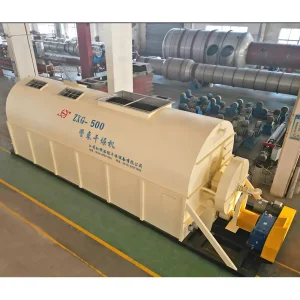
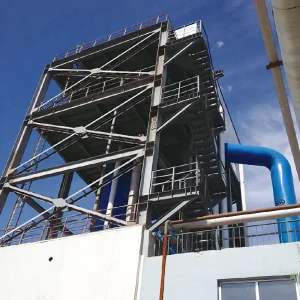
Partner with Jiangsu Zongheng to integrate low-carbon evaporation systems, custom-engineered for your factory's specific throughput and purity requirements.
 Zongheng