High-efficiency equipment designed to boost yields and integrate seamlessly into Seoul-focused agricultural and chemical processing infrastructures.
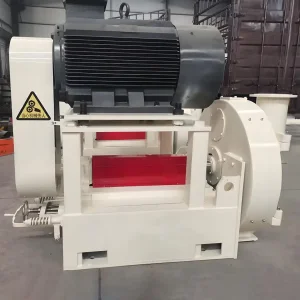
Optimized for high-throughput starch factories in Seoul's surrounding industrial belts, providing precise kernel processing and superior germ recovery rate.
View Details ➔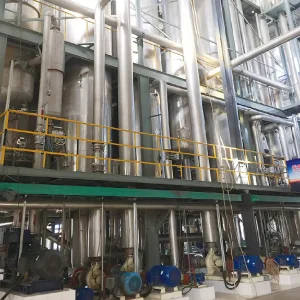
CE-certified high-performance systems configuration. Ideal for concentrating viscous fluids and crystallizing industrial byproducts under local Korean regulatory norms.
View Details ➔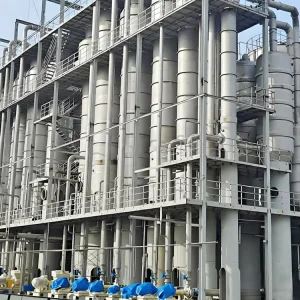
Harnessing exhaust heat from bundle dryers to run concentration cycles. Substantially cuts fuel costs for Gyeonggi-do starch manufacturers.
View Details ➔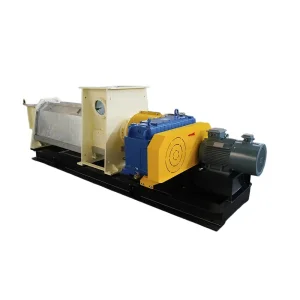
Highly efficient dewatering for corn fiber, spent grains, and municipal industrial sludges, reducing moisture loads prior to thermal drying.
View Details ➔The Seoul metropolitan region, which includes the massive industrial corridors of Gyeonggi province and Incheon port infrastructure, stands as South Korea's main consumer center and chemical processing hub. Although Seoul itself is a dense urban center, the surrounding agricultural processing facilities, ingredient refineries, and bio-industrial parks supply crucial raw materials to the domestic food, fermentation, and pharmaceutical sectors. Major South Korean conglomerates (such as CJ CheilJedang, Daesang, and Samyang Genex) rely heavily on advanced wet milling infrastructure to process imported yellow corn into high-fructose corn syrup (HFCS), food-grade starches, modified starch for packaging materials, and critical bio-chemicals.
Implementing high-precision Degerming Mills is critical to optimizing grain-yield dynamics in this demanding landscape. A mill must provide rapid impact shearing to free the germ from the endosperm and hull without cracking the germ itself. Oil content in the corn germ can exceed 40%; thus, keeping the germ intact is essential for clean floatation and extraction. If the germ is crushed during milling, oil migrates into the starch slurry, leading to foaming, filter clogging, and contamination that degrades starch quality.
Maize wet milling starts with precise grain steeping, followed by the crucial first-break degerming step. Operating a modern degerming mill in high-throughput facilities requires an understanding of fluid dynamics, mechanical shear forces, and material physics. Here is a breakdown of our advanced design approach:
Utilizing adjustable rotor-stator clearances to handle varying corn hybrids imported through Incheon port. Precise adjustments protect the germ while releasing maximum endosperm.
Dynamically balanced heavy cast iron frames reduce vibration. This extends bearing life and prevents unplanned maintenance in continuous 24/7 operations.
Optimized internal rotor geometry minimizes hydraulic resistance. This design lowers kilowatt-per-ton power consumption to align with Korea's high industrial electricity rates.
The processing cycle does not end at the mill outlet. The resulting slurry must immediately pass to downstream hydrocyclones and dryers to prevent bacterial activity and starch degradation. We provide complete solutions that connect our degerming mills directly to multi-stage starch washing cyclones, high-pressure single screw presses for fiber dewatering, and thermal dryers.
Jiangsu Zongheng Concentrating and Drying Equipment Co., Ltd (formerly known as Yixing Yangxi Light Industry Machinery Factory), founded in 1992, is located in Zhoutie Town, Yixing City, on the shores of the beautiful Taihu Lake. Over the past three decades, we have evolved into a modern high-tech enterprise specializing in the design, engineering, and manufacturing of thermal concentration, industrial drying, starch production lines, alcohol DDGS systems, and Category III medium & low-pressure vessel equipment.
As a standing member enterprise of the China Starch and Alcohol Association, our industrial machinery serves crucial global markets. We support high-throughput agricultural processing plants, pharmaceutical chemical units, and environmental wastewater recovery sites worldwide, including key hubs in Seoul, Gyeonggi, and surrounding areas in South Korea.
Established as Yixing Yangxi Light Industrial Machinery Factory, covering 15 mu with 45 pioneering employees.
Obtained ISO9001 certification, standardizing production management quality controls.
Officially recognized as a Jiangsu Provincial High-Tech Enterprise for engineering and design innovations.
Obtained the Special Equipment Manufacturing License of the People's Republic of China (License No.: TS2232C42).
Authorized to use the American Society of Mechanical Engineers (ASME) U-stamp, allowing entry into global markets with strict regulatory codes.
Secured International Quality System Certificate No. 45021, establishing a robust quality assurance program aligned with global standards.
Expanded facilities to over 54,000 m² with a dedicated engineering team, serving bio-refineries in South Korea, Southeast Asia, and Europe.
Modern starch processing is energy-intensive. Standard practices without thermal integration result in heavy energy losses. To help Korean mill operators lower running costs, we provide customized, high-performance thermal concentration systems:
Concentrating liquid steeping water, wastewater, or sugar syrups requires short contact times and low operating temperatures. Our Falling Film Evaporator Plants distribute the feed liquid as a thin film inside vertical tubes. This ensures quick evaporation without damaging heat-sensitive nutrients or sugars, maintaining high starch purity and heat efficiency.
To reduce thermal utility costs, we supply MVR Evaporation Plants. These systems compress and reuse clean evaporated vapor as the heating source for the evaporator. This reduces steam consumption by up to 90% compared to traditional multi-effect evaporators, which helps plants meet Korean environmental energy efficiency targets.
After separating fibers, germs, and starch, drying is the final step. Our ZXG Tube Bundle Dryers provide contact drying under low-oxygen, low-temperature conditions. This ensures safe, uniform drying of corn fibers and germ meal. For final starch powder drying, the MQG Airflow Dryer uses hot air to suspend and dry starch particles instantly, producing a consistent moisture content without overheating.
We understand that importing processing equipment into South Korea requires strict adherence to local industrial standards and safety codes. Our team offers specialized support to ensure seamless integration:
In step with global green transition initiatives, our technical team is developing smart-sensing degerming mills equipped with vibration and bearing temperature monitors. Additionally, we are building closed-loop evaporator systems designed for zero liquid discharge (ZLD). These innovations help starch refineries minimize water use and reuse process water within the plant.
Get answers to common technical queries about installing and operating starch and degerming machinery in South Korea.
Browse our full range of industrial dryers, evaporators, and cyclonic separation systems designed to optimize your plant's efficiency.
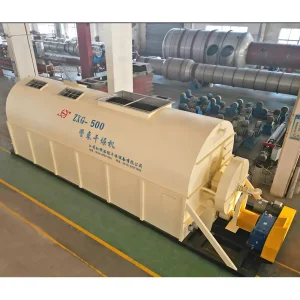
Energy-efficient, low-oxygen drying for germ, fiber, and gluten. Designed for safe, continuous industrial operation.
View Details ➔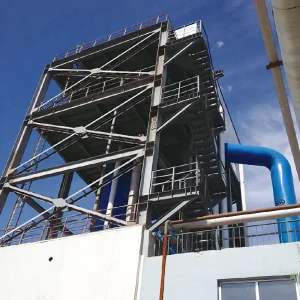
Uses vapor recompression technology to cut steam use, making it ideal for plants focused on carbon neutrality.
View Details ➔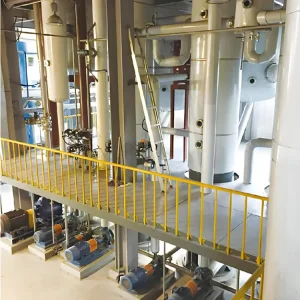
Ensures rapid concentration of heat-sensitive solutions while preventing scaling and thermal degradation.
View Details ➔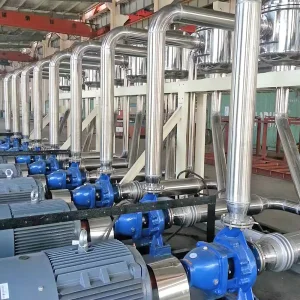
Multi-stage cyclone systems that remove impurities and wash starch slurry to ensure high final product purity.
View Details ➔
Heavy-duty stainless steel cyclones designed to handle abrasive slurry flows with minimal maintenance.
View Details ➔
Complies with strict safety and pressure standards, ensuring reliable operation in chemical and food processing plants.
View Details ➔
Engineered for precise particle separation, helping corn wet milling plants produce high-purity starch.
View Details ➔
Uses plant waste heat to concentrate wastewater streams, helping facilities achieve zero liquid discharge (ZLD).
View Details ➔ Zongheng